
AI Search Optimization: How Businesses Can Increase Visibility in ChatGPT and Google AI
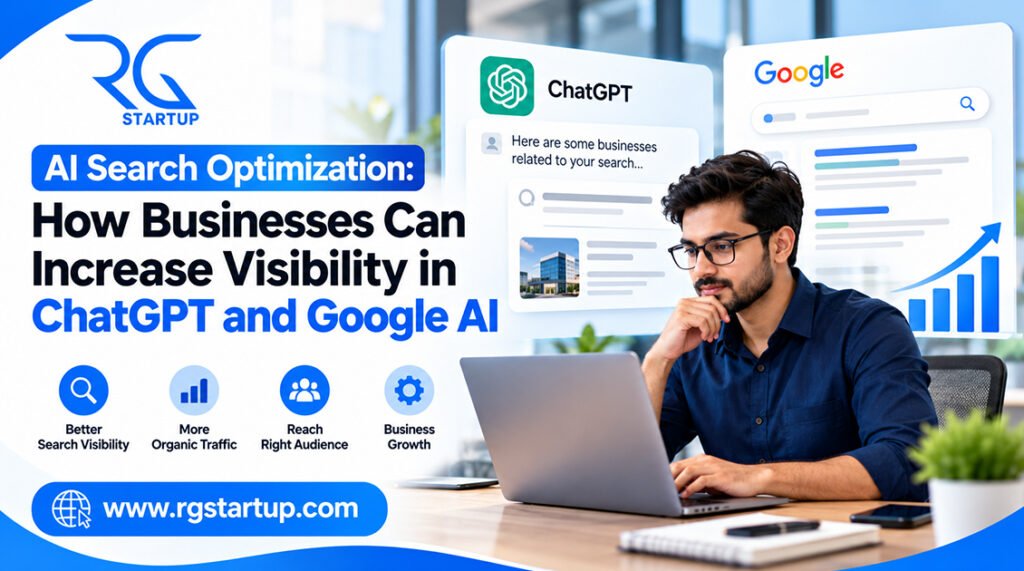
Search is trending in an intuitively obvious direction. Less “click-click-clicking off to other websites,” and more “asking ChatGPT, Google AI Overviews, and generative AI search tools to tell me about a topic, show me a comparison, or make me a recommendation,” changing the rulebook for brands’ discoverability. It’s no longer all about Google page rank, it’s now about whether an AI tool can find, comprehend, cite and trust that brand when it gives you an answer. The concept of AI Search Optimisation (AISO) is now kickstarting into gear. Applying what was all known about in the world of SEO fundamentals, content structure, brand authority, entity optimisation, technical accessibility and answer focussed content. Even Google themselves say it, in the realm of Generative AI Search, the ranking and quality systems are still here. What is AI Search Tuning and Why Should I Care? What is AI Search Optimisation? AI Search Optimisation is the optimisation of your website and online presence so that AI search engines know who you are, what you’re a specialist in, what you sell or do and what questions you’re able to provide answers for. Common related terms include AI Search Visibility, Generative Engine Optimisation, Answer Engine Optimisation or ChatGPT SEO. The idea is that the search for AI is not just a new twist on traditional search. An AI system would generate a single answer based on data from different sources. Based on Google, systems like retrieval augmented generation and query fan-out are part of its generative search experience. That opens up a new level of visibility for your business. If your website is underperforming in the organic search results, then at least your content ought to be intelligible enough to make for a handy depository when AI answers industry questions. How Is AI Search Helping Customers Find Businesses? For instance, a typical journey could be a user types in a query, glances through the search results, visits some pages, compares information, then makes a call. This same experience could be accelerated with AI search. A person could type a more detailed query, and receive an answer that synthesises info with a few associated links. This is even more true for commercial searches. “What digital marketing agency will improve a small business’ SEO and online presence?” you might ask. We’re not typing a keyword like a digital marketing agency anymore but describing an issue and requesting the search engine to figure that out. Put simply, marketers should generate content that reflects actual purchase questions, needs comparisons problems, decisions, and so on and not one word. AI Search Visibility: What Makes a Business Worth Referencing? AI Search shows up on your website by any means of scroll! AI Search is not placing “AI” or “ChatGPT” over and over to your website. It’s about becoming a definitively authoritative source. A good AI SEO Strategy often all begins with what makes a website useful to people, in the first place. Google’s current advice is for “high-quality, original content that is people-first.” The company also encourages focusing on proven search engine tuning (SEO) best practices instead of trying to uncover ai-search hacks. How to Create Content That AI Search Engines Can Understand and Reference. An AI-friendly page content needs to be generally easy for us to read, too. It should either put the bottom line first, be heavy on the basics in simple English, or contain enough detail for those who prefer to explore further. This belongs in bold and then a lengthy pep-talk paragraph or tracts. When asked about the price of a service, the procedure, or the solution of a problem, provide what you can certainly determine and also then give a rationale. Good page structure is composable with descriptive subheadings, short paragraphs, tables (if appropriate for comparison), bulleted lists, many examples, definitions, and other related links. All these things help you to explain clearly how the questions and answers are linked, without using a bunch of “answer blocks” in an unhelpful and robotic way. The company states, “Google’s generative AI experiences are optimized with standard SEO best practices like logical structure, text content crawlability, relevant images and videos, internal links, and more.” How Does ChatGPT SEO Work for Business Websites? Individuals will also refer to “ChatGPT SEO” in order to boost the chances of a business being found or cited as people search the internet through ChatGPT. There is no trick to ensure you are ranked. OpenAI states that ChatGPT search considers different things when it ranks results and placement is not guaranteed. Yet there is a core technical requirement that businesses should not overlook. OAI-SearchBot is the name of the bot that surfaced sites within ChatGPT search, based on OpenAI’s documentation. If a website blocks OAI-SearchBot, it would not appear within ChatGPT search answers, but it could appear within navigational links. So get the basics right before trying to optimise. Is your website accessible? Can AI crawl to all the important pages? Are you needlessly discouraging AI search crawlers with your robots.txt file? Are the pages you think are interesting actually worth citing? Google AI SEO: What Should Businesses Optimize For? With Google AI Overviews and AI Mode making this question more relevant, is it worth businesses developing a dedicated SEO approach for Google’s AI experiences? Not exactly. Google itself says that SEO is still important, as its generative AI capabilities are grounded on Google Search’s existing ranking and quality systems. There are no additional technical practices more exactly required for AI Overviews or AI Mode. But that’s not to say nothing has changed. Content now needs to perform across more search journeys. A page can now be ranked in the traditional sense, be used as a source for an AI answer, or support the user to go further with their research after that AI answer. For a deeper comparison, read our guide on AI SEO vs Traditional SEO. Traditional SEO focus AI search consideration Keyword relevance Question and intent relevance Rankings Visibility and references in
What is AEO? How to Optimize Your Website Content for AI Answers
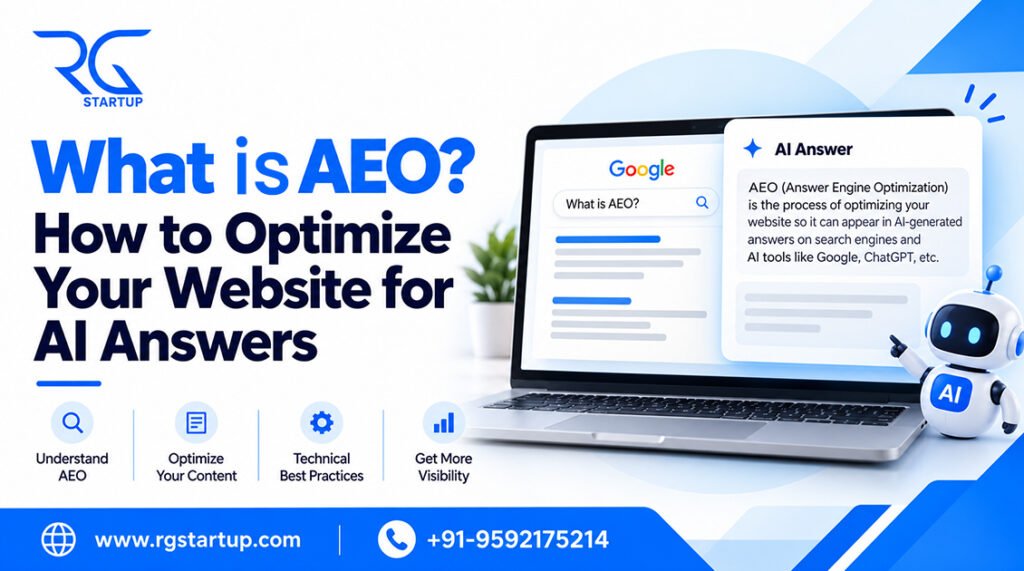
Ask Google, ChatGPT, or Perplexity a question today and you’ll often get a final answer before the first link loads. And if that’s not your website, someone else’s is. Here’s our guide to AEO, how it works and what you can do about it. Step-by-step. Answer Engine improvement Explained: What AEO Really Means. Answer engine improvement (AEO) is all about creating the content that Google-powered AI tools and programs want to see and acknowledge as the correct answer to a question. We’re talking Google AI Overviews ChatGPT Perplexity, voice assistants and the answer boxes that appear at the top of search results. It’s like the next stage of feature snippet work. The previous target was a good link. The new target is being the source the AI cites. That’s a different role, and it favors transparent, straightforward writing rather than relying on keyword manipulations. It also just so happens to favor the sort of content humans want to consume. The New Shape of Search: Why AI Search Tuning Matters Now. Searching was a list. You type one word, get 10 links, click on one and hope for the best. AI search largely eliminates that whole process. Language models read the prompt, determine what you’re really after, and then craft one response from data gathered throughout the internet. The figures reveal how fast these habits are changing. A 2025 Search Engine Land survey revealed that 87% of U.S. Adults have viewed an AI-generated search snippet. By contrast, a Pew Research report found that only 8% of searches accompanied by an AI-generated search snippet resulted in a click on a regular listing. The search is still out there. It just doesn’t always lead to the door anymore. Which is why AI search tuning went from “watch this space” to something you need to act on. Getting the click isn’t the end game anymore. Becoming the source of the AI citation is. Where Do People Actually Use Answer Engines? Anyone not just Google a person could ask ChatGPT for a comparison, take a look at an AI Introduction even though shopping at a retail outlet or utter out a inquiry in excess of to the mobile phone buddy as you go in the course of meal prep. Shoppers use in-store bots even though buying at a retail store. Folks use Perplexity for the reason that it shows them its means. The Throughline is intent. They want an answer, not a playlist. And they’re asking those longer, wordier questions they would have typed with a keyboard similar to “what’s a good accounting tool for a five-person agency?” rather than “accounting software”. Write your page in plain English. Readers want to know about you and your business as simply as possible, especially when they’re searching. AEO, GEO, AIO and LLMO: Cutting Through the Jargon There is a new acronym every few weeks and most agencies are willing to give you a different one. Here’s the fast version. AIO the broadest search intent optimizing content for all discovered and usable by any AI system. AEO more focused – answering questions (eg snippets and voice answers). GEO – (generative search enhancement) is when an LLM tool (e.g. ChatGPT or Gemini) generates a new answer rather than providing a static snippet. Names are close, and some agencies throw them out there on purpose to stay different. Don’t get hung up. They’re all just a different way of saying the same shift from “how do I rank?” to “how do I get cited?” AEO vs SEO: Why You Need Both The AEO vs SEO discussion is mostly a convenient false fight. SEO makes sure your pages are crawled, indexed, and ranked. AEO determines how the material on those pages is brought into answers. If you’re not crawlable, you can’t be cited: those fundamental tech areas still matter: site speed, mobile usability, interlinking, and a clean structure. They appeal to various audiences at various times. SEO is very much still the king when someone is prepared to buy or book high intent searches. AEO is someone who’s still doing their research. Factors SEO AEO Main goal Rank pages and earn clicks Be selected as the direct answer Where it shows Search result listings AI Overviews, snippets, chatbots, voice Success looks like Position, traffic Citations, brand mentions, recall Content style Full pages, broad coverage Direct answers inside well-structured pages Today one person might get your brand in an AI answer and pass over your click to search for your name tomorrow. You won’t find that first hit in your analytics, but it counts. How Do AI Engines Decide What to Cite? No official formula exists, but the trends remain the same throughout the studies. These are the common AI search ranking factors we keep seeing: See what’s not there: keyword density. Answer engines don’t browse for repetition, they extract. A page that hides its answer halfway down the page will lose to one that offers it upfront. Content Strategy for Answer Engines: Build Pages Worth Citing. A good content strategy for answer engines takes one habit. When you approach them, regard every question as a question, and get out the answer first. Follow with an explanation. Now add something only humans are able to produce: any piece of research or data, calculation, or actual project you have completed during your career. Summaries can only refer to existing online information-they’re unable to produce insights of their own. This is perhaps the most useful of the five best AEO practices as it creates another way-beyond first-time-ever-humans and algorithms will have a special reason to quote your work more precisely. How to Write Answers That AI Tools Can Quote. Good writing is simple writing. . How many molecules are in a mole of gas? The answer will be given at the end!Always include an answer to the question, then give three or more points to support your answer. Convert it into a single paragraph or two, but still use good grammar and accurate
AI SEO vs Traditional SEO: What Should Businesses Focus on in 2026?
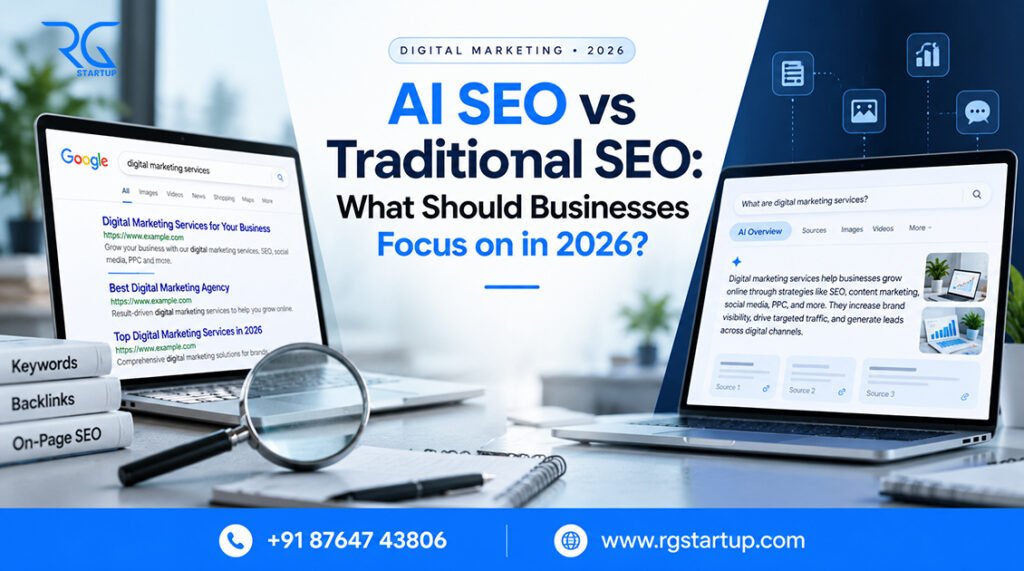
Search has undergone its greatest changes in recent years. While users are still turning to Google to find products, services, and answers, they’re also turning to ChatGPT Gemini Perplexity and other generative AI search options more and more for similar results. In the end, this is something that businesses need to decide. Should we ramp up our investment in SEO or begin shifting our focus further toward AI search? The answer is a little bit of both. Traditional SEO is still the foundation of being found, but AI SEO is beginning to broaden how to think about discovery. Search isn’t just about rankings and website clicks anymore. It’s about brand mentions, citations , answers in AI, and visibility across various types of search experiences. SEO Strategy 2026 for Brands By the year 2026, your SEO Strategy should be all about creating a search presence that is powerful in a traditional as well as an AI world. What is Traditional SEO? General Search Engine Tuning is the process of optimizing a website for search engine results in order for them to crawl, understand, and rank its content for various query topics. Traditional SEO commonly involves: A business cannot expect strong AI visibility if search systems cannot properly access or interpret its website. What Is AI SEO? What does AI SEO do? AI SEO is all about how artificial intelligence systems collect, analyze , summarize, and make recommendations for information. The change is not to simply compare how a page ranks for a keyword AI Search Tuning asks whether the information is too vague for an AI system to comprehend and to use to produce an answer. What does AI SEO relate to? It relates to experiences like AI Overviews ChatGPT Gemini and any other conversational search experiences. It will also focus more on zero-click visibility, where users are presented with the answer without clicking to the website. AI SEO isn’t just about creating masses of UGC or overloading pages with AI keywords. Good structure and in-depth, authoritative, and useful content are still essential. What is Answer Engine Improvement? What is AEO? AEO (answer engine tuning) is aimed at helping the content work well for answer engines that answer specific queries. An AEO is in particular effective for queries like: Short definitions, simple language, and concrete cues aid search and AI systems in understanding this content and referencing it. AEO is not a replacement for SEO, but it can work alongside it. And for business, the main lesson here is that we should not have the key questions hidden in the middle of lengthy paragraphs of contextual material. Content must address the questions head-on, but offer context at the same time. What Is Generative Engine Tuning? What is Generative Engine Improvement? Or GEO is a way of getting an AI to explain, aggregate, and discuss data. AEO is more short but more direct answer GEO is less short, but more comparison and recommendation. If the question is, ‘What is SEO?’ the answer should be just that. If the question is, ‘What is the best SEO strategy for a startup ecommerce business?’ a comparison is required. So here is when the decision between GEO vs SEO comes into the picture. Differences Between AI SEO vs Traditional SEO The difference between AI SEO and traditional SEO is mainly about where and how visibility is achieved. Traditional SEO AI SEO Focuses strongly on keywords Focuses more on topics, entities and context Individual page rankings matter Brand and domain-level clarity matter more Clicks and organic traffic are key metrics Mentions and citations can also matter Optimizes webpages for search results Optimizes information for AI understanding Search engines are the main environment AI-generated answers become another discovery channel Which AI SEO Strategies Should Businesses Focus on in 2026? Companies need to focus on creating customer-friendly, relevant content that hits the mark of the subjects they want to be known for. Some important areas include: Another trend to look for is conversational searches. That can include typing in a lengthy question to an AI system, rather than Google a keyword or keyword phrase. So, topical authority and context is king for AI Search Visibility. Is AI Better for SEO? Some SEO tasks are easier for AI than for humans. AI can analyze massive data sets in no time. AI can assist with keyword grouping, gap analysis of content, research, data analytics and the mundane repetitive aspects of SEO. Strategy and prioritisation that only humans can provide Original insights from others real life experience and understanding of what actually works for the customer. Thus, the best way of all would be human-centric but AI-enabled SEO. AI can speed up the process, but this shouldn’t be a substitute for expert editing. Is AI Replacing SEO? AI will have to help, but answers must come from somewhere websites will need to be found, organised and trustworthy businesses will still need quality content and authority. What is changing is between the search term & the final answer. A user might have once entered a keyword search, clicked on a result, and read an article. Now, that same user might turn to an artificial intelligence platform, pose a long-form question, and receive a summarized answer in response to content from several sources. Which is why Search Engine Optimization still has value and your company needs to gear up for this era of AI discovery. How AI Automation Improves SEO Efficiency and Workflow AI can reduce the time spent on repetitive SEO activities. It can help with: Instead, it should be a means to work smarter, not harder. For those conducting business, it’s better to leverage AI to be more efficient, not prolific. Keyword Research vs. Prompt Research Ancient seo dependence on the keyword research The first step is finding out what your target audience is searching for as well as reviewing the search phrase’s competition, relevance and effectiveness. AI search also adds another element: prompting research. Detailed natural language queries can be
How to Build High-Quality Backlinks in 2026 (Proven Methods)

If you want to improve your website’s search rankings in 2026, earning High-Quality Backlinks should be a key part of your SEO strategy. Despite advances in AI and search algorithms, backlinks remain one of the strongest signals that help search engines determine a website’s authority and trustworthiness. However, modern link building is no longer about collecting hundreds of random links. Today, success comes from earning relevant, trustworthy, and naturally placed links from authoritative websites. In this guide, you’ll discover proven methods to build a strong backlink profile and improve your organic visibility. What Are High-Quality Backlinks? A backlink is a link from one website to another. A high-quality backlink comes from a reputable website that is relevant to your niche and provides value to users. Characteristics of quality backlinks include: For example, a digital marketing blog receiving a link from a respected SEO publication is far more valuable than multiple links from unrelated websites. Why Backlinks Matter in 2026 Search engines use backlinks as trust signals. When reputable websites link to your content, it indicates that your information is useful and credible. Some major benefits include: A strong backlink profile can often be the difference between ranking on page one and getting lost among competitors. 10 Proven Link Building Strategies 1. Create Link-Worthy Content The best way to attract links is by publishing content that people genuinely want to reference. Comprehensive guides, original research, industry statistics, and case studies tend to earn natural links over time. 2. Guest Posting on Relevant Websites Guest posting remains one of the most effective White Hat Link Building methods. Focus on contributing valuable content to reputable websites within your niche rather than publishing on low-quality blogs. 3. Use Digital PR Digital PR helps you earn mentions and links from news websites, magazines, and industry publications. Original studies, surveys, and expert insights often attract media attention and valuable Authority Backlinks. 4. Broken Link Building Find broken links on relevant websites and suggest your content as a replacement. This strategy helps website owners improve their user experience while creating an opportunity to earn backlinks. 5. Resource Page Outreach Many websites maintain resource pages that link to helpful tools and guides. If your content provides value, you can reach out and request inclusion on these pages. 6. Analyze Competitor Backlinks Studying competitor backlink profiles can reveal valuable opportunities. Tools like Ahrefs and SEMrush help identify websites that may also be interested in linking to your content. 7. Create Free Tools and Resources Useful tools, templates, calculators, and checklists naturally attract Free Backlinks because people enjoy sharing practical resources. 8. Participate in Expert Roundups Contributing expert opinions to industry roundups can increase your visibility and earn links from relevant publications. 9. Appear on Podcasts and Webinars Podcasts and webinars often publish guest profiles and show notes that include website links. These mentions can contribute to a healthy backlink profile. 10. Build Strategic Relationships Networking with industry professionals, businesses, and organizations can create long-term opportunities for collaboration and natural link acquisition. Common Backlink Mistakes to Avoid Many websites struggle because they focus on shortcuts rather than sustainable growth. Avoid these common mistakes: A few relevant links from trusted sources are often more valuable than hundreds of weak links. Best Backlink Tools The right tools can simplify your link-building efforts and help uncover new opportunities. Ahrefs One of the most popular platforms for backlink analysis, competitor research, and link opportunity discovery. SEMrush Provides backlink audits, competitor analysis, and toxic link monitoring. Moz Pro Offers valuable metrics and backlink tracking features. Majestic Known for its Trust Flow and Citation Flow metrics that help evaluate link quality. Google Search Console A free tool that allows website owners to monitor incoming links and overall search performance. The Future of Link Building As search engines become more sophisticated, link building will continue evolving. The focus is shifting toward quality, expertise, and genuine authority. Key trends shaping the future include: Businesses that prioritize authentic relationships and useful content will continue to benefit from sustainable rankings. Frequently Asked Questions How many backlinks do I need to rank? There is no fixed number. The quality and relevance of your backlinks matter more than the total quantity. Are Free Backlinks useful? Yes, provided they come from reputable and relevant websites. Quality should always be the priority. What are Dofollow Backlinks? Dofollow Backlinks pass authority from one website to another and can contribute to improved rankings. Is guest posting still effective in 2026? Yes. Guest posting remains one of the most reliable methods for earning quality links when done on authoritative websites. Can bad backlinks harm SEO? Yes. Spammy or manipulative links can negatively affect your website’s reputation and performance. Conclusion Building High-Quality Backlinks in 2026 requires a strategic and long-term approach. Instead of chasing large numbers of links, focus on creating valuable content, building industry relationships, and using ethical outreach methods. Techniques such as guest posting, digital PR, resource page outreach, and competitor analysis can help you earn relevant links that support sustainable growth. By following these proven practices and avoiding outdated tactics, you can strengthen your backlink profile, improve search visibility, and achieve lasting SEO success.