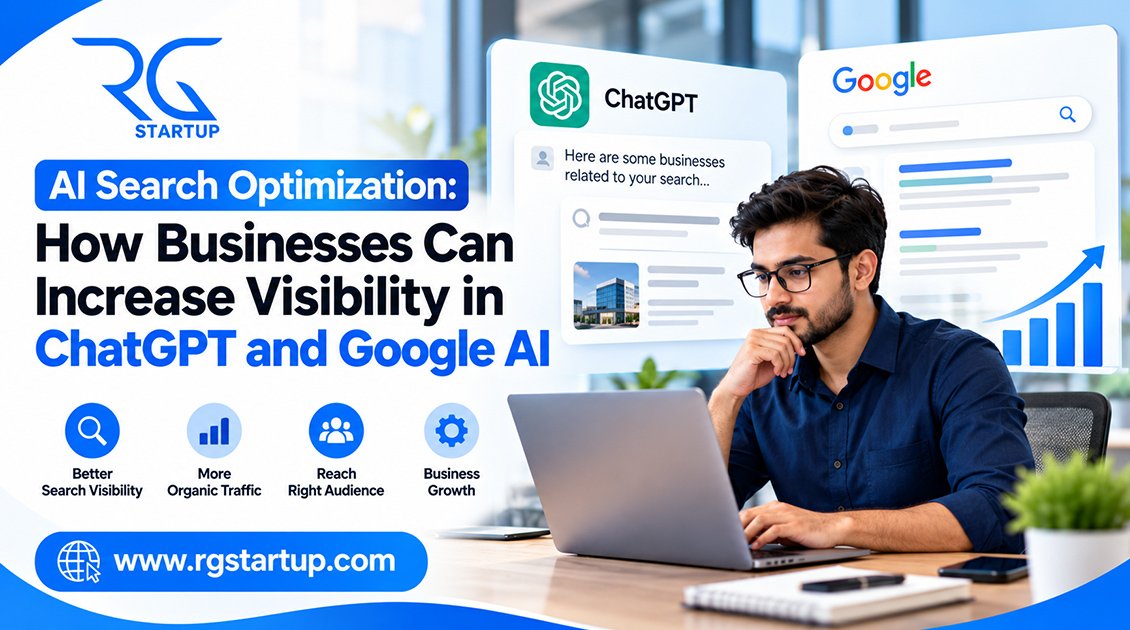
Search is trending in an intuitively obvious direction. Less “click-click-clicking off to other websites,” and more “asking ChatGPT, Google AI Overviews, and generative AI search tools to tell me about a topic, show me a comparison, or make me a recommendation,” changing the rulebook for brands’ discoverability. It’s no longer all about Google page rank, it’s now about whether an AI tool can find, comprehend, cite and trust that brand when it gives you an answer.
The concept of AI Search Optimisation (AISO) is now kickstarting into gear. Applying what was all known about in the world of SEO fundamentals, content structure, brand authority, entity optimisation, technical accessibility and answer focussed content. Even Google themselves say it, in the realm of Generative AI Search, the ranking and quality systems are still here.
What is AI Search Tuning and Why Should I Care?
What is AI Search Optimisation? AI Search Optimisation is the optimisation of your website and online presence so that AI search engines know who you are, what you’re a specialist in, what you sell or do and what questions you’re able to provide answers for. Common related terms include AI Search Visibility, Generative Engine Optimisation, Answer Engine Optimisation or ChatGPT SEO.
The idea is that the search for AI is not just a new twist on traditional search. An AI system would generate a single answer based on data from different sources. Based on Google, systems like retrieval augmented generation and query fan-out are part of its generative search experience.
That opens up a new level of visibility for your business. If your website is underperforming in the organic search results, then at least your content ought to be intelligible enough to make for a handy depository when AI answers industry questions.
How Is AI Search Helping Customers Find Businesses?
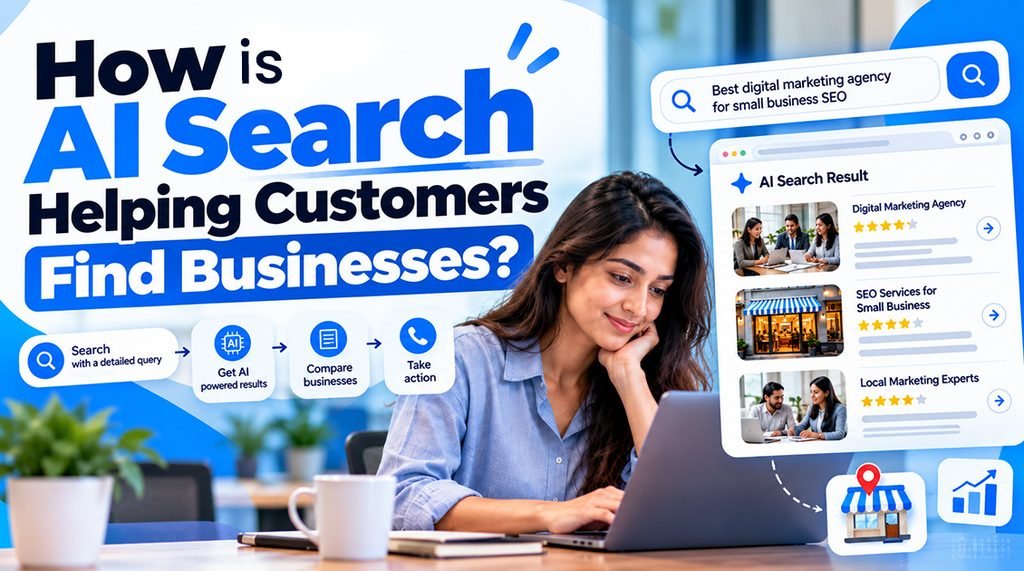
For instance, a typical journey could be a user types in a query, glances through the search results, visits some pages, compares information, then makes a call. This same experience could be accelerated with AI search. A person could type a more detailed query, and receive an answer that synthesises info with a few associated links.
This is even more true for commercial searches. “What digital marketing agency will improve a small business’ SEO and online presence?” you might ask. We’re not typing a keyword like a digital marketing agency anymore but describing an issue and requesting the search engine to figure that out.
Put simply, marketers should generate content that reflects actual purchase questions, needs comparisons problems, decisions, and so on and not one word.
AI Search Visibility: What Makes a Business Worth Referencing?
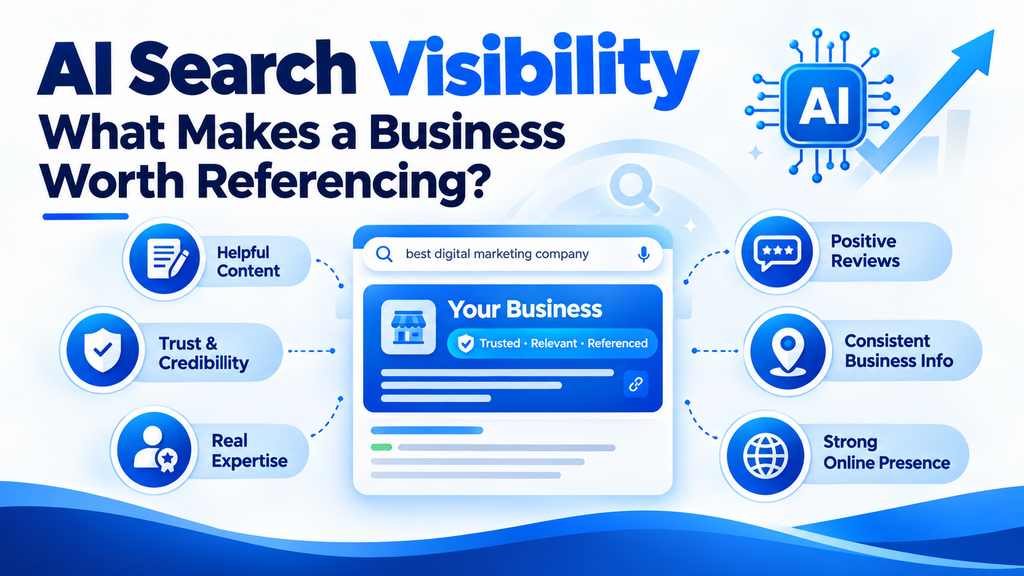
AI Search shows up on your website by any means of scroll! AI Search is not placing “AI” or “ChatGPT” over and over to your website.
It’s about becoming a definitively authoritative source.
A good AI SEO Strategy often all begins with what makes a website useful to people, in the first place.
- Clear information about what the business does and who it serves.
- Original content that adds something beyond generic summaries.
- Consistent information about the brand across important online sources.
- Strong internal linking between related topics.
- Pages that can be crawled, indexed, and understood by search systems.
- Evidence of genuine expertise and first-hand knowledge where appropriate.
Google’s current advice is for “high-quality, original content that is people-first.” The company also encourages focusing on proven search engine tuning (SEO) best practices instead of trying to uncover ai-search hacks.
How to Create Content That AI Search Engines Can Understand and Reference.
An AI-friendly page content needs to be generally easy for us to read, too. It should either put the bottom line first, be heavy on the basics in simple English, or contain enough detail for those who prefer to explore further.
This belongs in bold and then a lengthy pep-talk paragraph or tracts. When asked about the price of a service, the procedure, or the solution of a problem, provide what you can certainly determine and also then give a rationale.
Good page structure is composable with descriptive subheadings, short paragraphs, tables (if appropriate for comparison), bulleted lists, many examples, definitions, and other related links. All these things help you to explain clearly how the questions and answers are linked, without using a bunch of “answer blocks” in an unhelpful and robotic way.
The company states, “Google’s generative AI experiences are optimized with standard SEO best practices like logical structure, text content crawlability, relevant images and videos, internal links, and more.”
How Does ChatGPT SEO Work for Business Websites?
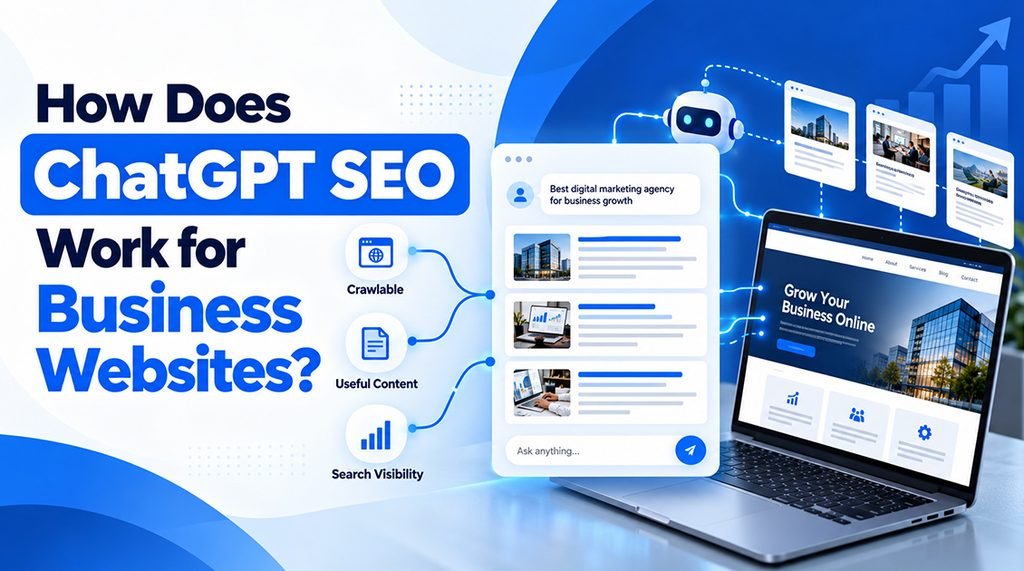
Individuals will also refer to “ChatGPT SEO” in order to boost the chances of a business being found or cited as people search the internet through ChatGPT. There is no trick to ensure you are ranked. OpenAI states that ChatGPT search considers different things when it ranks results and placement is not guaranteed.
Yet there is a core technical requirement that businesses should not overlook. OAI-SearchBot is the name of the bot that surfaced sites within ChatGPT search, based on OpenAI’s documentation. If a website blocks OAI-SearchBot, it would not appear within ChatGPT search answers, but it could appear within navigational links.
So get the basics right before trying to optimise. Is your website accessible? Can AI crawl to all the important pages? Are you needlessly discouraging AI search crawlers with your robots.txt file? Are the pages you think are interesting actually worth citing?
Google AI SEO: What Should Businesses Optimize For?
With Google AI Overviews and AI Mode making this question more relevant, is it worth businesses developing a dedicated SEO approach for Google’s AI experiences?
Not exactly. Google itself says that SEO is still important, as its generative AI capabilities are grounded on Google Search’s existing ranking and quality systems. There are no additional technical practices more exactly required for AI Overviews or AI Mode.
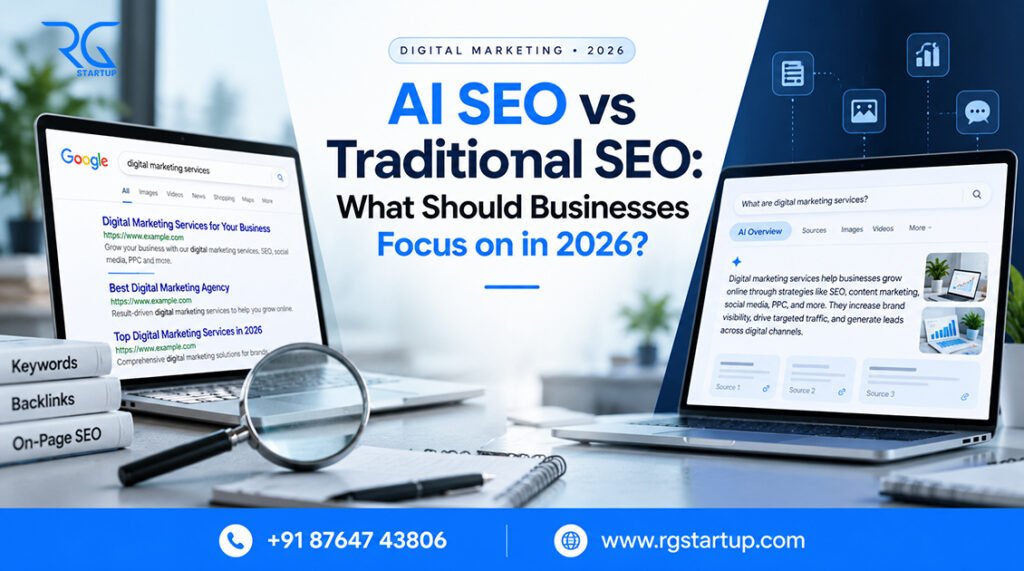
But that’s not to say nothing has changed. Content now needs to perform across more search journeys. A page can now be ranked in the traditional sense, be used as a source for an AI answer, or support the user to go further with their research after that AI answer. For a deeper comparison, read our guide on AI SEO vs Traditional SEO.
| Traditional SEO focus | AI search consideration |
|---|---|
| Keyword relevance | Question and intent relevance |
| Rankings | Visibility and references in generated answers |
| Page optimization | Clear, retrievable information |
| Backlinks | Wider authority and supporting sources |
| Organic traffic | Citations, visits and qualified discovery |
The foundation remains SEO, but the way users consume the information is expanding.
Which AI Search Ranking Factors Should Businesses Focus On?
You won’t find a particular code that will give you Google AI, Google ChatGPT, or any other AI search engine the exact way they will select a particular brand. Don’t trust what these agencies and tools are claiming that they have a special AI ranking score.
Rather, focus on signals that you truly can enhance. Technical accessibility – Your search engines need to be able to find your website. Content Quality – You do not want to offer a visitor any strong motivation for linking to your page compared to another page. Brand Clarity – You want to be clear about what your brand is and who you are as a company.
In practice, a useful AI Search Optimisation program should improve the entire digital presence, rather than chase one supposed ranking factor.
Establish Topical Authority through an AI-Driven SEO Content Strategy.
There’s not one article you can write about a competitive subject and become an expert. An even more robust A.I. SEO Strategy builds a collection of accepted content on the issues that matter most to customers. A structured content strategy is what makes this possible.
For instance, a web marketing company does not simply need to submit a page with the term “electronic advertising and marketing” having. They might create other pages which contain the same key words yet with various other topics and also pages which include the same queries however with different keyword expressions.
Page-Pairings naturally relate pages with each other. For example: How a page could relate to a technical page. A service page could relate to an education page, a comparison article could relate to an implementation page.
This brings a more explicit topical structure to searchers and search engines. It offers a business more ways to be relevant, when people are asking different variations of the same query.
How Can Businesses Optimize Their Content for ChatGPT and Other AI Platforms?
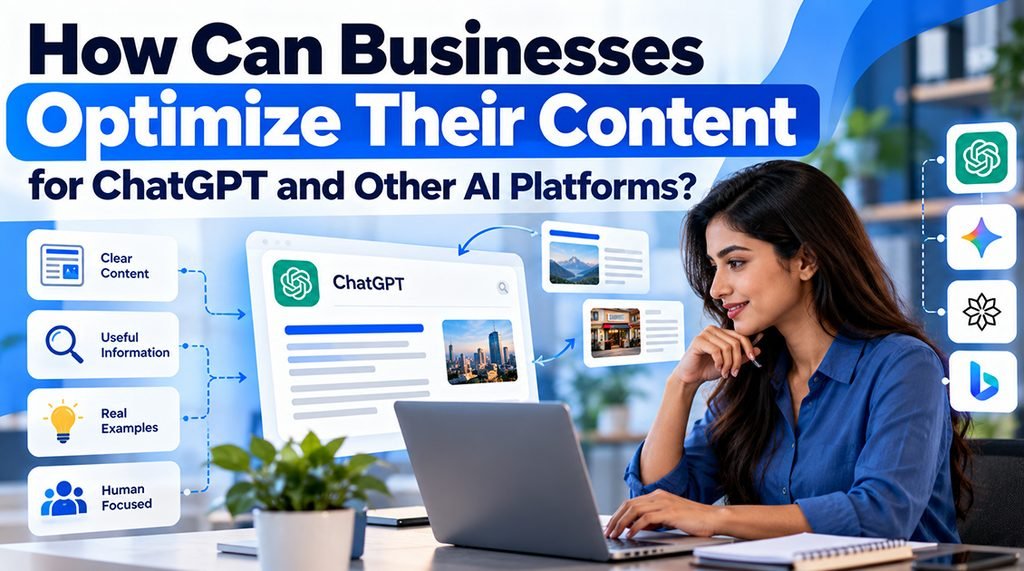
Don’t write as if you’re trying to impress an AI machine. For ChatGPT, write for the person asking the question.
A good page should: make it easy to browse and find the right information, explain any technical language and avoid waffle that might obscure the reader’s understanding of exactly what it is your business does. When suitable, include original examples, descriptions of processes, data, experiences, or practical insights to distinguish the page from numerous generic articles. Our explainer on Answer Engine Optimization (AEO) covers this in more detail.
OpenAI says you can get your website content “discovered” and “cited” in ChatGPT by allowing OAI-SearchBot to reach your content.
That’s exactly what you have to do even if it is not crawling, unlike what you’re used to with normal search: really make the page useful. That is worth everything.
Google AI Improvement Takes More Than Adding FAQs.
These FAQs can be useful, but just sticking in ten questions on every page doesn’t suddenly make a site go more visible in Google AI. The questions have to be there because people really want those answers.
You can use a service page to cover what to expect and whether or not it’s right for your explanation process, timings where appropriate, tools needed, mistakes, and determinants. A blog can compare, define use cases and actually implement.
This makes for a better experience than showing a page for every permutation of keywords. Google also warns against creating massive amounts of content to game search rankings, including creating it on scale if it’s not adding value. You can read this in Google’s spam policies.
Why Brand Mentions and Third-Party Sources Matter in AI Search.
When someone searches for your company, AI can stumble upon the data of your website, your publication directories, industry sources, social platforms and other open source.
That’s why consistency is key. So, if one source lists a business under website development and another lists the same business as a graphic design agency, the more significant story isn’t so straightforward.
So business has to speak the right branding information on the right platforms and have legitimate mentions where it makes sense. I am not talking about hundreds of mentions. It is about establishing a digital footprint that constantly narrates the story of what the business is, what they do and where their strength is.
It is applicable in both conventional SEO as well because the external links and valuable content work together to give a bigger image of a business.
Technical SEO Still Matters for AI Search Improvement.
You may be tempted to assume that AI Search Optimisation is its own, unique thing apart from technical SEO. And that mistake can be costly.
If pages that need to be crawled aren’t, internal links are not best optimised, the content is not indexable or user signals are bad then generating another piece of content on AI isn’t going to fix the problem.
A practical technical check should cover:
- Robots.txt and crawler accessibility.
- XML sitemap and indexation.
- Internal linking and site architecture.
- Mobile usability and page experience.
- JavaScript-rendered content where applicable.
- Canonicalization and duplicate URLs.
- Structured data that accurately matches visible page content.
Structured data can help search engines to understand pages and this helps with the visibility of AI but there’s no switch to flip here. Google has a guidelines document in which it states precisely this.
How to Measure AI Search Visibility and AI SEO Performance.
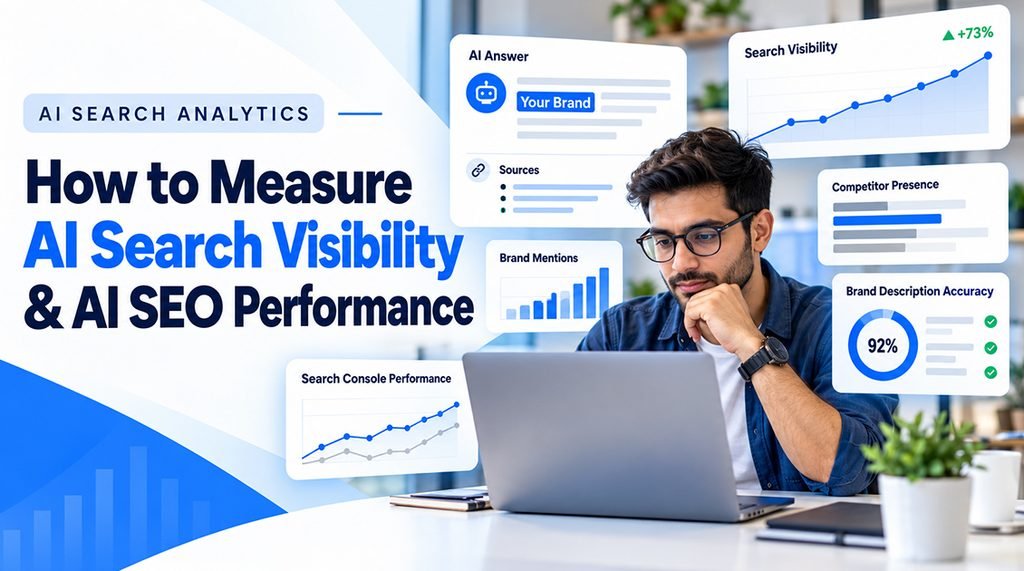
Traditional SEO reporting is often reliant on rankings, impressions, clicks, organic traffic and conversions. And then there’s AI search: Is the brand being mentioned? Is that a quote? Is it true? And what is it answering?
Measurement is emerging, so don’t rely solely on a single “AI score” of your SEO tool. Monitor multiple signals at once.
Site owners can view performance reporting for Google’s generative AI features in Google Search Console. This allows them to track how their content is performing within those experiences.
In terms of more generic AI Search Marketing strategies, you might wish to write down some key prompts and be sure of the presence across all of the platforms from time to time. Watch how mentions describe your brand, which other competitors are mentioned and to what extent the reply from AI is consistent with your positioning.
Common AI SEO Mistakes That Can Hurt Visibility.
The biggest mistake is using AI search as a shortcut to SEO. At times, organizations will roll out hundreds of AI generated pages, insert talking points into headings, or produce cookie cutter articles repeating the same points over and over.
This approach can generate a huge site without generating a valuable one. There is guidance from Google not to generate pages that ‘builds a large website that provides little or no added value’ and to consider quality, relevance, and human judgment when using generative AI.
Other common problems include:
- Blocking relevant AI search crawlers without understanding the effect.
- Writing generic content that simply summarizes existing pages.
- Creating separate pages for tiny keyword variations.
- Treating FAQ sections as an AI ranking trick.
- Making unsupported claims about AI ranking factors.
- Ignoring conventional SEO because the website is “optimized for AI.”
- Publishing AI-generated material without proper fact-checking.
AI can help with research and structure, but it shouldn’t replace editorial judgment.
How RG Startup Can Help Businesses Build AI Search Visibility
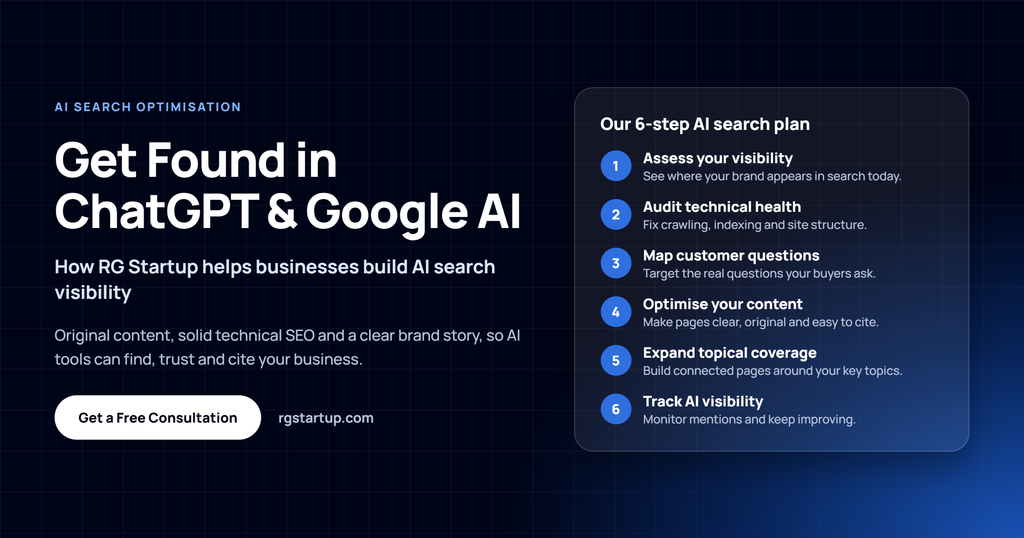
AI Search Optimisation works best for businesses when it is integrated into the wider digital strategy instead of a separate content exercise. Given that RG Startup already has existing activities in web design and development, digital marketing content strategy and online digital services, this grounds itself in a natural place to bring these areas together.
An AI plan might start with assessing your brand’s existing visibility in search, auditing the technical health of your content, mapping your key customer questions, optimizing your current content, expanding topical coverage, and observing how visibility changes in an AI search experience.
The new method for RG Startup bringing SEO today would be you cleansing and preparing your website with audits, keyword research, on-site optimisation, adding content & backlinks and measuring ROI. These components can be recalibrated for an AI-first search landscape without you having to announce that you’ve discovered the secret formula to get AI talking about your brand. Explore our complete SEO services to see how we can help.
This distinction is crucial to an AI Search Marketing business. It’s not about building for a fake AI score. It’s about building a search engine spider that recognizes and a user that searches.
FAQs About AI Search Optimization
What is AI Search Optimisation?
AI Search Tuning optimises your brand’s content, site architecture, authority, and accessibility for AI-powered search experiences.
How can I improve my AI Search Visibility?
Technical SEO, original functional content, transparent brand presence, topical authority, and continuous tracking in AI search engines.
Can SEO help with ChatGPT and Google AI visibility?
YES. Google says that the general SEO best practices still apply to AI-based search.
Is ChatGPT SEO another form of SEO?
The goals are similar, but chatbot search adds another dimension of discovery where crawlability, relevance and quality of web content can determine if content is surfaced.
Does more AI-generated content mean a better AI Search Ranking?
Not necessarily. You should be concentrating on producing high quality, relevant, original, useful content, not high volume, low value AI generated material.
Can RG Startup assist in AI Search Improvement?
RG Startup combines learnings from AI search into its current portfolio of SEO, content, website, and digital marketing services, depending on what the business needs. Contact our team for a free consultation.