
Digital Marketing for Small Businesses
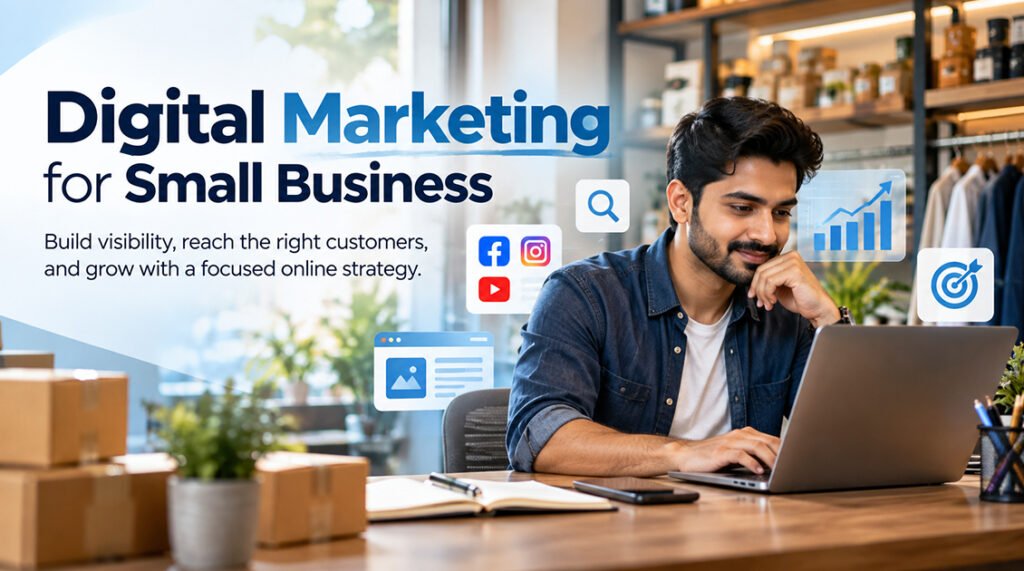
For a small business, digital marketing may not be about having a presence on all the sites, producing a piece of content every day or high spending on advertising. It is about understanding where your customers will be searching, and what you need to communicate to them, in as many marketing activities as feasible to satisfy the business objectives. Establish awareness while driving relevant visitors, increasing leads and eventually closing sales. The key focus should be customer centric rather than digital channel centric. A useful approach inevitably moves to the fundamentals like: establish your objectives; identify your audiences; organize your site; select the channels; develop needed content; and analyze what has proven to work. What is digital marketing all about for Small Business? Digital marketing is the promotion of products or services using digital channels to reach consumers. For a small business, this may involve using a website, search engines, social media email content marketing, and online paid advertising. The key thing is that digital marketing is not one activity. Digital marketing channels could be used in different ways. Digital Channel Primary Purpose How It Can Help a Small Business SEO Search visibility Help potential customers discover the business Local SEO Local discovery Reach people searching for nearby products or services Content marketing Education and awareness Answer customer questions and build trust Social media Engagement and awareness Build relationships and maintain visibility Email marketing Nurturing Stay connected with interested customers Paid advertising Targeted acquisition Reach people with relevant offers or searches Website Information and conversion Explain the business and encourage enquiries Like I said, no single approach is always superior; the perfect blend will definitely vary based on the type of business, target customer and available resources and objectives. Your online marketing manual also emphasizes that content and a suite of additional digital tactics will integrate (not operate in segregation) toward providing a comprehensive customer path. Start With the Basics: Goals, Audience and Budget Before choosing tools, answer three questions: Clearly identify your channel – what do you want digital marketing to do? For example, your goal might be to: Goal: Having a goal is vital because it will provide some direction to all marketing activities. If not this will just be a matter of counting numbers of followers hits articles published without understanding if they are supported by the business goal. Know Who You Are Trying to Reach A small business does not necessarily need to reach everyone. Identify: How can their technology really support those small businesses? Before you go all in to marketing, ensure the nuts and bolts are in place. Your website should clearly communicate: A Simple Website Readiness Checklist Your website should not just be an online brochure, but an aid that moves your visitors toward the next step – whatever that may be. Take for example, instead of putting every service on a generic page, say a local home improvement company; they could have separate pages covering: full home renovation, kitchen remodeling, bathroom remodeling. So, the more a visitor uses the website and the more the search engine learns what the content of each page really is. How Can Small Businesses Leverage SEO? SEO can help small businesses get seen when customers are looking for the products, services, answers, and solutions you offer.The aim is not to put in as many keywords in as possible. Put the other way round and search for what the searcher is actually trying to do. Start With Keyword Research The purpose of Keyword research is to find the words and phrases that people tend to search. For example, a local bakery might discover searches such as: Build Pages Around Search Intent Different searches can represent different needs. Search Type Possible User Need Useful Content “what is SEO” Learning Educational guide “SEO services for small business” Evaluating providers Service/comparison content “SEO agency near me” Finding a provider Local/service page “how to improve Google ranking” Solving a problem How-to guide “SEO pricing” Evaluating cost Pricing/buyer guide Make Local SEO Part of the Strategy For businesses serving a specific area, local search can be especially important. Focus on making essential business information accurate and consistent, creating location-relevant content where useful, and making it easy for potential customers to understand: Local SEO should help the right nearby customer find the right information, rather than simply trying to increase traffic from everywhere. Can Small Businesses Succeed With Content Marketing? Yes, but you should not consider content marketing as a race to generate the most number of articles.Taking the stronger line requires us to produce content which tackles genuine customer questions and issues.Content marketing is bigger than blogging. Content is there to give prospects what they need to know in every step of the sales process with TOFU content going to create awareness, MOFU for evaluation, and BOFU for consideration. Plan Your Content Before Getting Started Start by identifying the questions customers ask. For example, a small accounting firm could create content around: This creates content around actual customer needs rather than publishing random topics. Evaluate Your Existing Content Before creating something new, Ask: Sometimes improving an existing useful page is more practical than producing another similar article. Reach Customers Through the Right Channels Based on the business, useful distribution channels might include. Could be that the small business content plan does not plan enough.Devise a realistic schedule and don’t expect to publish dozens of times in a single day. You do not need to use every channel. Track and Evaluate Content Performance Content performance can be evaluated through signals such as: The purpose is not simply to discover which article received the most traffic. It is to understand which content is contributing to the business objective. How Can Small Businesses Use Social Media Marketing? Focus on the Platforms Your Customers Use Do not feel pressured to maintain five or six social profiles. Consider: Business Situation Potential Focus Visual products Instagram, Pinterest, visual content Professional B2B service LinkedIn, educational content Local service business
How to Build High-Quality Backlinks in 2026 (Proven Methods)

If you want to improve your website’s search rankings in 2026, earning High-Quality Backlinks should be a key part of your SEO strategy. Despite advances in AI and search algorithms, backlinks remain one of the strongest signals that help search engines determine a website’s authority and trustworthiness. However, modern link building is no longer about collecting hundreds of random links. Today, success comes from earning relevant, trustworthy, and naturally placed links from authoritative websites. In this guide, you’ll discover proven methods to build a strong backlink profile and improve your organic visibility. What Are High-Quality Backlinks? A backlink is a link from one website to another. A high-quality backlink comes from a reputable website that is relevant to your niche and provides value to users. Characteristics of quality backlinks include: For example, a digital marketing blog receiving a link from a respected SEO publication is far more valuable than multiple links from unrelated websites. Why Backlinks Matter in 2026 Search engines use backlinks as trust signals. When reputable websites link to your content, it indicates that your information is useful and credible. Some major benefits include: A strong backlink profile can often be the difference between ranking on page one and getting lost among competitors. 10 Proven Link Building Strategies 1. Create Link-Worthy Content The best way to attract links is by publishing content that people genuinely want to reference. Comprehensive guides, original research, industry statistics, and case studies tend to earn natural links over time. 2. Guest Posting on Relevant Websites Guest posting remains one of the most effective White Hat Link Building methods. Focus on contributing valuable content to reputable websites within your niche rather than publishing on low-quality blogs. 3. Use Digital PR Digital PR helps you earn mentions and links from news websites, magazines, and industry publications. Original studies, surveys, and expert insights often attract media attention and valuable Authority Backlinks. 4. Broken Link Building Find broken links on relevant websites and suggest your content as a replacement. This strategy helps website owners improve their user experience while creating an opportunity to earn backlinks. 5. Resource Page Outreach Many websites maintain resource pages that link to helpful tools and guides. If your content provides value, you can reach out and request inclusion on these pages. 6. Analyze Competitor Backlinks Studying competitor backlink profiles can reveal valuable opportunities. Tools like Ahrefs and SEMrush help identify websites that may also be interested in linking to your content. 7. Create Free Tools and Resources Useful tools, templates, calculators, and checklists naturally attract Free Backlinks because people enjoy sharing practical resources. 8. Participate in Expert Roundups Contributing expert opinions to industry roundups can increase your visibility and earn links from relevant publications. 9. Appear on Podcasts and Webinars Podcasts and webinars often publish guest profiles and show notes that include website links. These mentions can contribute to a healthy backlink profile. 10. Build Strategic Relationships Networking with industry professionals, businesses, and organizations can create long-term opportunities for collaboration and natural link acquisition. Common Backlink Mistakes to Avoid Many websites struggle because they focus on shortcuts rather than sustainable growth. Avoid these common mistakes: A few relevant links from trusted sources are often more valuable than hundreds of weak links. Best Backlink Tools The right tools can simplify your link-building efforts and help uncover new opportunities. Ahrefs One of the most popular platforms for backlink analysis, competitor research, and link opportunity discovery. SEMrush Provides backlink audits, competitor analysis, and toxic link monitoring. Moz Pro Offers valuable metrics and backlink tracking features. Majestic Known for its Trust Flow and Citation Flow metrics that help evaluate link quality. Google Search Console A free tool that allows website owners to monitor incoming links and overall search performance. The Future of Link Building As search engines become more sophisticated, link building will continue evolving. The focus is shifting toward quality, expertise, and genuine authority. Key trends shaping the future include: Businesses that prioritize authentic relationships and useful content will continue to benefit from sustainable rankings. Frequently Asked Questions How many backlinks do I need to rank? There is no fixed number. The quality and relevance of your backlinks matter more than the total quantity. Are Free Backlinks useful? Yes, provided they come from reputable and relevant websites. Quality should always be the priority. What are Dofollow Backlinks? Dofollow Backlinks pass authority from one website to another and can contribute to improved rankings. Is guest posting still effective in 2026? Yes. Guest posting remains one of the most reliable methods for earning quality links when done on authoritative websites. Can bad backlinks harm SEO? Yes. Spammy or manipulative links can negatively affect your website’s reputation and performance. Conclusion Building High-Quality Backlinks in 2026 requires a strategic and long-term approach. Instead of chasing large numbers of links, focus on creating valuable content, building industry relationships, and using ethical outreach methods. Techniques such as guest posting, digital PR, resource page outreach, and competitor analysis can help you earn relevant links that support sustainable growth. By following these proven practices and avoiding outdated tactics, you can strengthen your backlink profile, improve search visibility, and achieve lasting SEO success.
Google March 2026 Spam Update: What Changed & How to Recover Your Rankings

The Google March 2026 Spam Update has created massive fluctuations in website rankings across multiple industries. Many site owners reported sudden traffic drops, while others saw unexpected growth. If your website is affected, understanding this update is the first step toward recovery. In this blog, we’ll break down what actually happened, why rankings dropped, and what you should do next to regain your position in Google search. What Is the Google March 2026 Update? Google regularly updates its algorithm to improve search quality and remove low-value content. These updates can be broadly categorized into: The March 2026 changes appear to be a mix of both — focusing heavily on content quality, spam detection, and user experience improvements. Why Many Websites Lost Traffic If your traffic suddenly dropped, you are not alone. Several factors likely contributed: 1. Low-Quality or Thin Content Google is prioritizing content that genuinely helps users. Pages with: are being pushed down in rankings. 2. AI-Generated Content Abuse AI content is not banned — but mass-produced, low-quality AI content is being filtered out. 3. Weak E-E-A-T Signals Google now gives more importance to: If your website lacks author details, credibility, or real-world experience, rankings may decline. 4. Over-Optimized SEO (Spam Signals) Techniques like: are being detected more aggressively. Key Changes in the March 2026 Update Here are the biggest shifts observed in this update: ✔ Content Quality Over Quantity Publishing 100 low-quality articles no longer works. One strong, helpful article performs better. ✔ Search Intent Matters More Google is rewarding pages that directly answer user queries clearly and completely. ✔ Technical SEO Still Important Factors like: continue to impact rankings. ✔ Increased Ranking Volatility Many websites experienced major fluctuations because Google recalibrated how it evaluates content quality across all niches. Signs Your Website Was Hit You may be affected if you notice: How to Recover After the Update Recovery is possible — but it requires a smart SEO strategy. 1. Improve Content Quality 2. Remove or Fix Low-Value Pages 3. Build Trust & Authority 4. Optimize for User Experience 5. Focus on Real SEO (Not Tricks) Avoid: Instead, focus on: Important Truth: It’s Not a Penalty Many people think Google “penalized” their site — but that’s not always true. In most cases:👉 Your competitors improved👉 Google changed ranking signals So your site simply became less relevant compared to others. Pro SEO Strategy for 2026 If you want stable rankings in the future, follow this: Final Thoughts The Google March 2026 update is a clear signal: 👉 Shortcuts no longer work👉 Quality is everything👉 User-focused content wins If you adapt to these changes, your website can not only recover but grow even stronger in search rankings.