
Digital Marketing for Dental Clinics | Get More Patients
When you start the process of finding a dentist to visit, it may be before you even see the front door of the clinic. Patients shop for dentists in their area, look at the services provided, read reviews, visit websites and see what procedures are offered and if they feel at ease with their choice of services. This all means that digital marketing for dental clinics is vital to a dental practice. Having an easy to find site, providing clear explanations of treatment, helping clients to trust the practitioner and reducing the journey from marketing to booking can all be achieved. Still, digital marketing isn’t just about making a post on social media or paying for ads. Any practice deserves a connected digital approach that integrates its website SEO local search content paid marketing, social media, reputation management and patient follow-up. The best strategy also changes with the nature of the dental practice. An inexperienced general dentist might wish to create a broader mix of dental patients, while a practice offering orthodontics implants, paediatrics, or cosmetic dentistry might prefer to target specific patient groups. Here is a summary of how dental practices can leverage digital marketing to the maximum, what channels to focus on, how to generate enquiries and what to track. What Does Digital Marketing for a Dental Clinic Include? Digital marketing for dental clinics is promoting your dental practice using online platforms to connect with potential patients, promote your services, establish credibility and help appointment inquiries. How does a practice exist digitally?A presence on the web including a website, Google Business Profile, search engine rankings, social media accounts, educational material, reviews online, emails, and sponsored ads. Each channel comes with its own set of expectations. It is not reasonable to be on every possible channel just for having a presence there. Digital Channel Main Purpose Role for a Dental Clinic SEO Organic visibility Help potential patients find relevant services Local SEO Local discovery Reach people searching for dentists nearby Website Information and conversion Explain treatments and encourage enquiries Content marketing Education Answer common dental questions Google Ads Paid visibility Reach relevant high-intent searches Social media Awareness and engagement Demonstrate the practice and educate audiences Reputation management Trust Manage reviews and patient feedback Email marketing Communication Maintain appropriate patient relationships Marketing automation Follow-up Organise enquiries and communication Connecting them to each other is the most likely route to the strongest results rather than considering them as separate campaigns. For instance, locate a dentist (Google it), follow links to a practice website, read about a procedure, consult reviews, scan social media sites then call the practice. Every step may impact the ultimate choice. How Should Dental Clinics Build a Digital Marketing Strategy? The goal of a practical dental marketing strategy should be directed by the goals of the practice and the patients that it wishes to attract. A clinic might wish to encourage enquiries for general appointments, sell a certain treatment, attract patients from the local area, make more people aware of a new service or strengthen recognition of an existing service. The channels and content used should be guided by these aims. The patient journey can be viewed as: Awareness → Research → Consideration → Enquiry → Appointment → Patient Experience → Retention. Build the Digital Foundation Firs The website should make it easy for visitors to understand: Important treatment and service pages should be easily navigable as for services that are significant for the practice. Mobile devices: the website must be functional for mobile devices. A prospective patient who searches for the practice on a search engine should be able to access the practice details and contact details easily. How Can SEO Help Dental Clinics Attract New Patients? What SEO for dental clinics means SEO for a dentist may help a practice to assist show up when people are looking for dental treatment or information about dental treatment in search results. Search behaviour can vary widely from general search expressions to very specific treatment searches. One type of search may be for a dentist in the local area, while another may be for more specific treatment or dental problems. How do you use SEO? The goal of SEO is to know how to use keywords effectively on a website to optimize a position in search rankings. It’s not just stuffing keywords throughout a website. Create Useful Pages for Important Dental Services A dental practice should consider dedicated pages for important services rather than placing every treatment on a single page. Depending on the practice, these could include: The accurate pages should be pages of evidence of services actually offered by the practice; For each page, there should be an explanation of the service that is accessible and easy to understand, the patient should be given answers to questions they may have, and it should be obvious as to what the next step is. Such as a treatment page giving an outline of what the treatment is about, things patients might want to mention to the dentist, what the consultation is like and providing contact details for the clinic. Use Content to Answer Patient Questions A dental clinic could create articles or resources around questions such as: Healthcare content must stay focused on education and keep within reasonable bounds of responsibility. It should not try to identify specific patients or make unwarranted promises about treatment. Significant point: take a good look at the dental material and see if it makes sense; be aware of the treatments, pathologies , procedures, risks, and patient care that go with it. Why Is Local SEO Important for Dental Practices? Locally-optimised SEO may be mostly significant for numerous dental practices, as many individuals might be on the hunt for the dentist that is local to them. A practice should ensure that their NAP (name address phone number, postal/zip code) is accurate and consistent on all relevant online directories. This includes the: Reviews Can Support Local Trust Reviews can also shape the perception of
Digital Marketing for Hospitals
Many patients now start their search for a hospital online. They may be looking for another local hospital, searching for the right department, looking for a particular consultant or expert, searching for available services, reading patient comments or simply browsing a hospital’s website before making an inquiry. Because of this, digital marketing in hospitals is not only a channel to generate promotion for healthcare services, but also a channel to improve information accessibility, guide patients understand healthcare services, increase confidence and lower the complication for making inquiry and appointment. Though, healthcare marketing needs more attention than marketing of many other industries. Hospitals carry sensitive data, doctors make important decisions and the patients are possibly exposed to stress and apprehension. Promotional communication has to be objective, credible, and transparent. A good hospital digital marketing approach should unify SEO, local search content, social paid reputation management, email, and web optimization. It is not about using all channels just because they exist. What Does Digital Marketing for Hospitals Include? Hospital digital marketing refers to the relies on the internet, the web services to serve the purpose of the hospital’s visibility and presence online, deliver information that is useful, health care related messages and show case the areas of concern services of the hospital and also gives us with the means of communication through which the patients can put their queries and book appointments. On the hospital, a digital presence may be represented by the hospital’s website, search engine listings, Facebook and Twitter pages, online discussions, library of knowledge, E-mail brand, and other paid information about the hospital. The different channel fulfils a different function. Digital Channel Primary Purpose How It Can Support a Hospital SEO Organic search visibility Help people discover relevant hospital services Local SEO Local discovery Make nearby patients aware of the facility Website Information and conversion Explain departments, doctors and services Content marketing Patient education Answer common healthcare questions Social media Awareness and engagement Communicate useful updates and information Google Ads Paid visibility Reach people searching for specific services Email marketing Ongoing communication Nurture relevant enquiries and relationships Reputation management Trust Monitor and respond to patient feedback Marketing automation Efficiency Organise enquiries and follow-up The optimal combination varies as the hospital’s services, target market, website design location, online presence, and business goals. There are also required to apply various digital strategies for various departments in a hospital. To illustrate, maternity service, care units diagnostics dentistry cardiology orthopaedics, or prevention service will come with distinct patient searching paths. How Should Hospitals Build a Digital Marketing Strategy? A good hospital marketing strategy should be built around the target audience of the hospital and the information they are seeking. Determine the key reasons before selecting a platform; for example, to help raise awareness of a department; increase enquiries about appointment; improve standard of visibility for particular treatments; share healthcare information; improve facilities for patients. Awareness → Information Search → Service Evaluation → Enquiry/Appointment → Care Experience → Ongoing Relationship Start With a Clear Digital Foundation The hospital website itself needs to become the ultimate source of information rather than pushing all people to rely solely on social media or third parties. A professionally built, well-structured website makes this much easier to achieve. Important information should be easy to find, including: The next step should be easy to find. If the client enters the name of a service, then they should be able to choose from a number of options, e. g. To call the hospital, ask for an appointment, contact a department, or get further information. The visitor should not have to go through multiple pages to find out what the hospital does or how to enquire. How Can SEO Help Hospitals Get Found Online? SEO for hospitals assists healthcare providers in getting found in search results that matter when patients are conducting online searches for their healthcare needs. Yes, search behaviour can vary markedly. An individual may be searching for a hospital close to them, a given department, a medical specialism, a diagnostic service or for information on a health related issue. This translates to the need for useful information to be produced in hospital SEO instead of healthcare keywords. Build Pages Around Actual Services and Search Needs A hospital website should have clear, useful pages for important services and departments. For example, a hospital may have dedicated pages for: Use Healthcare Content to Build Search Visibility Content can support SEO by answering questions that people commonly search for. For example, a hospital’s content strategy might cover: Healthcare content is specific. It must be factual and responsible and shouldn’t present generic educational content as a diagnosis or personalised medical advice. Things to remember: Search presence should never sacrifice medical correctness. Hospital based content should have suitable review procedures for discussing medical diagnosis treatments procedures or hospital care. Why is Local SEO Important for Hospitals? For many hospitals patients are seeking healthcare services in a sensible geographic range. This way hospital local SEO becomes an essential element to be visible online. A hospital should adopt a consistent name telephone fax, website details across the key relevant online directories. This includes: People may find the hospital through Google Business Profile. Reviews are also part of the local search experience. It would be wise for hospitals to keep track of reviews and address them in a professional manner when needed. Confidential information should not be compromised in response to a positive or negative review. Local content is another example. Rather than using several pages asking the same question as ‘where exactly is this hospital?’ try providing real information about the hospital’s facilities and access to the areas served. How Can Content Marketing Support Hospital Marketing? Hospital content marketing plays significant and hard to ignore roles because making health care decision whether minor or a major one does require the gathering of information before any action. A person may not seek an appointment right away upon learning where the hospital is. They may want to
Digital Marketing for Gyms

Managing a gym is not just about having the best equipment, the most experienced trainers and the ideal location. Customers are more likely to find the fitness gyms, compare memberships, look at reviews and facilities and then make an inquiry to the health gym they are interested in. That means digital marketing for a gym is key in attracting new members and maintaining good communication with current members. If a digital strategy is thoughtfully implemented, it can bring a number of benefits such as increasing a gym’s coverage on the internet, driving enquiries, generating trust and taking prospects from the initial enquiry to membership. The difficulty is in knowing which of the channels to focus on. SEO, Google Ads, social media content email, local search, reputation management automation all have their purpose. This step-by-step guide shows how a gym can use digital marketing in a practical way, where to start, the support that marketing strategies can give to the acquisition of clients, and how to evaluate if marketing actions are helping to achieve business objectives. What Does Digital Marketing for Gyms Actually Involve? Using online media channels to market your gym to potential customers, stay in touch with existing services, inform customers about the fitness industry and drive enquiries or memberships. Anything from a gym’s website and Google Business Profile to search engine optimisation, and then all the way to social media, paid advertising, email marketing and automated follow-up. The key is that these channels shouldn’t be individual activities. Maybe you will find a gym through Google, go, and have a look at their Instagram profile, read reviews, flick through the information on the website about memberships and then plan to make an inquiry. A practical gym marketing system can therefore look like this: Channel Main Purpose Typical Role SEO Improve organic visibility Attract people actively searching Local SEO Reach nearby prospects Generate local discovery Google Ads Capture high-intent searches Generate immediate enquiries Social media Build awareness and engagement Show facilities, trainers and results Content marketing Educate prospects Answer fitness-related questions Email marketing Nurture prospects Maintain relationships Reputation management Build trust Strengthen credibility Website Convert visitors Turn interest into enquiries How Can Gyms Build a Strong Digital Marketing Strategy? A good gym marketing strategy needs to start from the business goal, not the platforms list. A gym could be seeking to increase membership enquiries, to promote personal training, to generate interest in a new branch, to boost class bookings, or to improve retention. Each of these objectives might call for a somewhat different marketing strategy. Begin with the audience. The messaging from a gym will vary according to who it is marketing to. For example a gym specialising in the best gym for students will communicate to a different market to a luxury gym targeting professionals. Once the audience and objective are clear, map the customer journey: Awareness → Interest → Evaluation → Enquiry → Visit → Membership → Retention People are at a relatively general awareness stage, possibly just looking for workout info or a local gym. Until they get deeper into their research they will be weighing up features such as facilities price trainers classes reviews and membership options. Instead, your marketing is giving useful information at various points and not asking every visitor for an immediate sale. Build the Digital Foundation First Before increasing advertising or content production, make sure the basic digital assets are ready. Your website should clearly communicate: How Can SEO Help Gyms Attract More Local Searches? Search Engine Tuning for gyms can increase the visibility of fitness companies. A potential customer, searching for” [term]” near me, [term]” for the [zip state zip code], or [term] near. Can have a requirement. Appearing high in search results can attract these customers to the website or business-profile. SEO isn’t just about loading a page with keywords. There must be relevant useful content on the site that potential members are actually looking for. Start With Gym-Focused Keyword Research Keyword research can reveal the services, questions, and locations that matter to your audience. For a gym, relevant search themes may include: Field-specific changes may be usefully employed where appropriate. For instance, a gym can develop a relevant set of pages for its local area instead of trying to cover a wide geographical area. It is not about duplication or throwing every keyword there is. The objective is about discovering what prospect members want and designing relevant pages based on the identified needs. Strengthen Gym Local SEO Creating a local presence is vital for many fitness businesses, as customers are often more concerned with proximity. Begin with the Google Business Profile of the gym. Ensure that the name address contact number category hours of operation website images, and services info are consistent. The photographs should be taken regularly and allow the future members to see the gym when they visit. Use genuine stock pictures of the actual gym trainers facilities and the gym equipment itself rather than the odd generic gym shot! Reviews also play a part in local visibility and trust. Get real customers to review your service and reply politely to all reviews. What Role Does Content Marketing Play in Gym Marketing? Content marketing is more effective than other forms of direct marketing for gyms because it offers answers in advance of the prospect signing up. We can’t assume that people searching online are always looking for a membership straight away. People may have been looking for information about starting to exercise, deciding, which type of exercise to do, trying to learn more about nutrition or even asking for training advice. A gym could publish content around topics such as: The content should remain relevant to the services the gym actually provides. Create Content That Supports Different Stages of the Journey An article aimed at beginners might be appealing to someone still trying to understand the world of fitness. A section on your personal training services might appeal to a client who is weighing up options.
Digital Marketing for Hospitality

For most of the hotels and hospitality businesses, the customer journey starts well before the guest has arrived onto the property. Booking research for a business or leisure trip to the area can be done by simply searching online for the destination, browsing through hotels and browsing reviews on the areas using images and comparing room rates and facilities before the guest has even stepped onto the property. Such is the importance of digital marketing for hospitality. Simply having plenty of appealing photographs of hotel rooms on its website and launching the odd pay per click advertising campaign is not an effective strategy in the modern hospitality arena. The hospitality company should be found by potential visitors; clearly communicate the attributes of the business, build, and develop brand confidence and then influence the reader to perform the desired actions on the site and offline. This booklet describes how hotels resorts restaurants, travel accommodation providers and other businesses in the hospitality industry can use search engine improvement (SEO), local search content social media, paid advertising, email marketing and automation to create a more successful online marketing structure. What is the implication of digital marketing on hospitality companies? Hospitality digital marketing is the usage of online platforms to attract the guest through online advertisement for hospitality services, direct booking and maintaining relation with customers. A hotel would want to utilise the likes of search engine optimisation, Google Business Profile, social media, paid advertising, email campaigns, online reviews and their own website. A resort may want to look at destination content, visual storytelling, seasonal campaigns and experience based marketing too. Second, what is crucial is that these channels should be integrated. For instance a traveller will search for the hotel on Google, explore the hotel’s website (maybe to compare hotel rooms), explore the hotel’s Instagram account (for pictures), read the reviews and then through paid advert again book the hotel. If all the channels gave a consistent experience then the business stands a greater chance of being considered. So, hotel online marketing should be seen as a full customer journey instead of one bunch of stand alone promotions. The Main Digital Channels for Hospitality Channel Primary purpose Typical hospitality use SEO Organic visibility Hotel, destination and service searches Local SEO Local discovery Maps, directions, nearby searches Content marketing Education and engagement Travel guides, destination content Social media Awareness and visual discovery Rooms, experiences, events Paid advertising Targeted traffic Hotel offers and booking campaigns Email marketing Retention and nurturing Offers, confirmations, guest communication Website marketing Information and conversion Room pages, amenities, bookings Reputation management Trust Reviews and guest feedback Marketing automation Efficiency Follow-ups, segmentation and personalised campaigns The right combination depends on the property, location, audience, seasonality and commercial objectives. How Does the Hospitality Customer Journey Work? Few hospitality customers will place a booking upon first contact with a single piece of marketing. Their process continues through many procedures. A traveller planning a trip might first of all look for things to do, then later on might search for hotels, look at locations, look at room types and read reviews. But a very busy business traveller might search a whole lot more directly for the hotel next to the business district or event venue. So a hospitality business needs content and marketing activities for differing stages of their customers’ decision-making process. From Destination Discovery to Booking the journey can broadly move through four stages: Awareness:The traveller encounters a destination, hotel, experience, or hospitality brand. Consideration:They compare accommodation, types, locations, prices, facilities, reviews, and experiences. Decision:They verify availability, look into deals and determine to agent or book directly, or.. Post-booking and retention:It extends over pre-arrival communication, through the stay itself, and post-stay intervention, review, and other products offers. This is an interesting implication for hospitality marketing. It would be wrong for a business to have the same message for a person who just found the destination and a person who is comparing room options. Information about the destination may suit one person. A comparison of a room or special deal may be more useful at an earlier stage. How Can SEO Bring Hotels and Hospitality Businesses to Be Found? The hospitality SEO is optimizing your business to be listed when potential guests search for hotels, destinations, attractions, conferences, accommodation, and entertainment. Following Google’s own SEO Starter Guide is a good way to get the basics right, and a professional SEO company can help you scale results faster. Search behaviour in hospitality can be extremely specific. A traveller, at any given stage of their search, might search for ‘hotels near airport’, ‘family hotel in [destination]’, ’boutique hotel near [area]’, or ‘best hotels for business trips’. This opens up opportunities other than ranking for the hotel name itself. Build Pages Around Guest Search Intent Have valuable pages on the services and experiences that matter to your audience. Depending on the business, this could include: The objective is not to create pages simply because a keyword exists. Each page should provide information that matches what the visitor is actually trying to find. For instance, a hotel is close to an airport and a guest is interested in travel distances, photo’s, check-in times, parking and room facilities. A vacationer interested in a family holiday resort and a guest might be more interested in room configurations, activities , dining and local sites. Use a Content Structure That Supports SEO Why Is Local SEO Important for Hospitality? Location is by far the most influential factor in hospitality search behaviour. Guests will frequently search for a place to stay by city neighborhood attraction, airport railway station, business district or other nearby area. It makes hospitality local SEO very relevant. The Google Business profile for a hotel should list accurately details about the hotel like the name address telephone number, opening, and closing hour, photographs, and services provided. Reviews too are important. Customers frequently consider reviews while shopping and so your business needs to have a robust process in place to solicit
Digital Marketing for Real Estate

Online presence has become an area very important in real estate marketing. Today, buyers, investors, tenants, or property sellers are researching various options through search engines, social networks, property portals and review sites long before they meet in person with an agent or visit a property. For a real estate agency builder, independent realtor or property consultant, digital marketing cannot be only about uploading photos of properties on the internet. Digital marketing means creating visibility, offering valuable content, creating enquiries and establishing a process, which leads a prospect from their first online contact to a site visit to signing a property contract. So, a successful digital marketing approach for real estate must integrate SEO, local search content social marketing, paid advertising websites lead management and customers follow-up. The choice of the optimum mix will be dictated by the property type of business, target market, location, and marketing goals. What Does Digital Marketing Mean for Real Estate? Real estate digital marketing: refers to marketing real estate through the internet. Promoting properties for sale or rent, creating brand awareness and generating enquiries by use of various online channels such as search engines, online maps, social media websites, paid advertising, email, and messaging platforms. The goal is not to be everywhere, this is impossible. This is about the real estate enterprise being in the platforms where their potential customers are doing research and seeking information. For example, a person looking for a property in a specific area may find an agency via Google Search or Google Maps. A prospective buyer may come to an agency’s website after viewing a property video via Instagram. A commercial property investor may find a company through LinkedIn after reading a market report. This is also the reason why the effectiveness of real estate marketing is higher when several marketing channels are supporting the same customer journey and not working on their own. Digital Marketing Should Support the Entire Property Buying Journey Real estate tends to require more consideration than the typical purchase in our everyday lives. A prospect may evaluate location price builder specifications available facilities, customer reviews and mortgage options before approaching a business. Customer stage What the prospect may do Useful digital channels Awareness Searches for locations, property types or investment information SEO, content, social media Consideration Compares properties, prices and developers Property pages, videos, guides, reviews Decision Requests information or books a visit Landing pages, PPC, WhatsApp, forms Conversion Visits property and discusses the transaction CRM, sales follow-up, email Post-purchase Shares experience or considers another property Email, reviews, referral communication A strong strategy therefore needs to answer the prospect’s questions at each stage rather than focusing only on generating an initial enquiry. How the Modern Real Estate Customer Journey Works The prospect’s digital journey leads up to their consideration of a specific property. It could be the search for more information about the location, property values, investment potential or the steps involved in property purchase. Since they are getting more educated, they’re search is getting more refined. They look at 2-BHK or 3-BHK, they look at a particular locality or they search for commercial space in a particular business zone. At the same stage, the more content and in-depth property data can be used to maintain business presence until the prospect makes up their mind to compare with other alternatives. Property videos, floor plans, local guides, market data, FAQ and customer testimonials can be used here. From time to time, the lead may opt for direct communication by requesting a call back, shooting a message on WhatsApp, submitting a form or making a site visit. This is the time for sales and marketing to join forces. It is only the first step, not sufficient for the business. How Can SEO Improve Real Estate Visibility? SEO for property allows the property company to become visible when many potential customers search for a specific information or service. The search engine optimization differs from the paid advertising as it concentrates on drawing the naturally high positioning by creating a beneficial material on the sites, internal structure, search engine appropriate keywords and harmonious relation between the reader’s search and the displayed data. There are various types of searches that real estate SEO can be optimized for. It can be a service search like real estate agents in Chandigarh, it can be for a property like 3 BHK flats in Mohali or an information search like the best areas to invest in Chandigarh. These searches are all different levels of intention. Build Content Around Real Search Behaviour Keyword research is not just about spamming your primary keywords. A real estate Web site could be built on locations, property types, questions from buyers, investment topics, legal information and local markets. For example, a website targeting a particular city could create: This results in a more extensive content structure, with a key main page linking to supporting articles within the site through link insertion. The source article identifies this as a hub and spoke strategy featuring pillar content, cluster content, and internal linking. Optimise Property and Service Pages A real estate website should not be solely a homepage for search engines. Individual property pages, location pages and even service pages can be much more relevant. A good property page will clearly communicate what you are selling, and what action you want the visitor to take next. Key information might be the type of property location, points of interest, photos , layout plans, news, and notes, and an obvious way to enquire. The intent is that the page is valuable both to the individual conducting the search and to the business. Why Local SEO Matters for Property Businesses In fact, real estate is very much related to geography. Buyers and sellers tend to search by a city name, a neighbourhood, a location or the ” near me” phrase. It makes real estate local SEO very relevant for any agency or property professional local expertise. Google Business Profile – Google business profiles
What Is Digital Marketing & How Does It Work? A Complete Guide
Digital marketing can be defined as the marketing of a business, product, service, or brand using digital media channels to reach consumers. Digital marketing could include any number of content on a website, or email marketing, digital advertising or even search engine optimisation (SEO).But digital marketing is not just posting a message to your social channels or advertising on Google. A digital marketing approach that makes sense ties various channels together and uses specific business goals. One customer can find your business through a search engine, go to your website, engage with your content and ultimately send you an enquiry or purchase.Thus, visibility is not the only goal of digital marketing. Digital marketing also consists of the target audience, the right channels, the creation of relevant information, calls to action and the use of performance data for more marketing effectiveness. Understanding the Core Idea Behind Digital Marketing What is digital marketing? Digital marketing is the practice of marketing through digital channels, digital media and digital technologies. This includes marketing via a web-based platform, email, social media, applications, Search engine marketing (SEM), websites, digital content, as well as television and radio.Various channels can also be used to attract different stages of the customer journey. Search engines are a great tool to let potential customers discover your business, content can be used to serve them the answers they are looking for, social media could be used to engage with them and email to maintain an engagement. Digital Marketing and Online Marketing: Are They the Same? Terms like digital marketing and online marketing are commonly used interchangeably. In everyday use, both generally refer to actions like: The terminology matters less than how these channels are used to achieve a specific business objective. Why Digital Channels Matter for Businesses Communication between businesses and their audiences is possible through the use of digital channels without being dependent on advertising.A business can describe its services on its website, get found by using the search engine, stay in touch using social media, use email to connect with existing users and target specific users with paid advertising.The right combination depends on factors such as: How a Digital Marketing Campaign Moves From Awareness to Action The way digital marketing works is to establish a connection between the business and the right people at the right places at the right time to lead them to a desired action.It may be subscribing to an e-mail list, visiting a web site, downloading material, requesting a quotation, booking a service, buying a product etc.A simple way to understand the process is:Attract → Engage → Convert → Retain Stage What It Means Examples Attract Help relevant audiences discover the business SEO, content, social media, paid search Engage Help visitors understand the business Website pages, guides, videos Convert Encourage a desired action Enquiry, booking, sign-up, purchase Retain Continue the relationship Email, follow-ups, useful content These stages are not necessarily sequential. A prospect may come to a website at first by an advertisement, visit it once, leave it for a while and then come back to it via a search engine, compare several offers and eventually make an inquiry. Finding the Right Audience and Understanding Their Needs A digital marketing strategy should begin by identifying the goal of the business.Consider: Turning Customer Interest Into Action Getting a visitor to arrive at a website is just one aspect of digital marketing. The next stage is to allow the visitor to have a clear idea what they have to do.Given the business, this could mean: Exploring the Different Areas of Digital Marketing Digital marketing consists of several specialist channels. Businesses do not necessarily need to use every channel. The appropriate mix depends on the audience, objectives, resources, and customer journey. Channel Main Purpose Typical Activities SEO Improve organic search visibility Keyword research, on-page SEO, technical improvements Content Marketing Educate audiences Blogs, guides, videos, FAQs Social Media Build awareness and engagement Posts, discussions, community interaction PPC Advertising Gain paid visibility Search and social advertising Email Marketing Maintain relationships Newsletters, offers, automated emails Website Marketing Inform and encourage action Service pages, landing pages, forms Local SEO Reach local audiences Listings, local content, reviews Search Engine Optimisation: Building Organic Search Visibility SEO involves improving a website and its content so relevant pages can appear in organic search results.It can include: Search engines can be valuable because users are often actively looking for information, products, or services. Google’s SEO Starter Guide provides official guidance about helping search engines understand website content. Start With Search Behaviour These terms can then inform relevant website pages and content. Keywords should support the information rather than be inserted simply to increase frequency. Making Local Search More Useful Local SEO is particularly relevant for businesses serving a specific geographical area. Businesses can support local visibility by: Content Marketing: Answering Customer Questions Through Content Content marketing refers to compiling value-adding content, which may attempt to answer questions, solve problems, offer advice or help customers make a decision. We are not trying to publish everything; our content should answer true customer needs and should be part of a larger business goal. Build Content Around Customer Needs Before creating content, consider: Question What to Establish Who is it for? Target audience What do they need? Problem or information requirement Why are they searching? Search intent What should the content help them do? Desired outcome What should happen next? Enquiry, subscription, or purchase Make Better Use of Existing Content Existing content can sometimes be improved by: This can make existing resources more useful without continually creating new pages. Pay-Per-Click Advertising: Reaching Customers Through Paid Search PPC offers businesses the ability to buy a presence on the internet. Search advertising can target when people are searching for specific keywords for example; social advertising can target by certain demographics.PPC can give you visibility faster than organic SEO, but it still has to be managed. Google Ads also explains how bidding and budgets work in paid advertising. Google Ads provides official information about
Digital Marketing for Small Businesses
For a small business, digital marketing may not be about having a presence on all the sites, producing a piece of content every day or high spending on advertising. It is about understanding where your customers will be searching, and what you need to communicate to them, in as many marketing activities as feasible to satisfy the business objectives. Establish awareness while driving relevant visitors, increasing leads and eventually closing sales. The key focus should be customer centric rather than digital channel centric. A useful approach inevitably moves to the fundamentals like: establish your objectives; identify your audiences; organize your site; select the channels; develop needed content; and analyze what has proven to work. What is digital marketing all about for Small Business? Digital marketing is the promotion of products or services using digital channels to reach consumers. For a small business, this may involve using a website, search engines, social media email content marketing, and online paid advertising. The key thing is that digital marketing is not one activity. Digital marketing channels could be used in different ways. Digital Channel Primary Purpose How It Can Help a Small Business SEO Search visibility Help potential customers discover the business Local SEO Local discovery Reach people searching for nearby products or services Content marketing Education and awareness Answer customer questions and build trust Social media Engagement and awareness Build relationships and maintain visibility Email marketing Nurturing Stay connected with interested customers Paid advertising Targeted acquisition Reach people with relevant offers or searches Website Information and conversion Explain the business and encourage enquiries Like I said, no single approach is always superior; the perfect blend will definitely vary based on the type of business, target customer and available resources and objectives. Your online marketing manual also emphasizes that content and a suite of additional digital tactics will integrate (not operate in segregation) toward providing a comprehensive customer path. Start With the Basics: Goals, Audience and Budget Before choosing tools, answer three questions: Clearly identify your channel – what do you want digital marketing to do? For example, your goal might be to: Goal: Having a goal is vital because it will provide some direction to all marketing activities. If not this will just be a matter of counting numbers of followers hits articles published without understanding if they are supported by the business goal. Know Who You Are Trying to Reach A small business does not necessarily need to reach everyone. Identify: How can their technology really support those small businesses? Before you go all in to marketing, ensure the nuts and bolts are in place. Your website should clearly communicate: A Simple Website Readiness Checklist Your website should not just be an online brochure, but an aid that moves your visitors toward the next step – whatever that may be. Take for example, instead of putting every service on a generic page, say a local home improvement company; they could have separate pages covering: full home renovation, kitchen remodeling, bathroom remodeling. So, the more a visitor uses the website and the more the search engine learns what the content of each page really is. How Can Small Businesses Leverage SEO? SEO can help small businesses get seen when customers are looking for the products, services, answers, and solutions you offer.The aim is not to put in as many keywords in as possible. Put the other way round and search for what the searcher is actually trying to do. Start With Keyword Research The purpose of Keyword research is to find the words and phrases that people tend to search. For example, a local bakery might discover searches such as: Build Pages Around Search Intent Different searches can represent different needs. Search Type Possible User Need Useful Content “what is SEO” Learning Educational guide “SEO services for small business” Evaluating providers Service/comparison content “SEO agency near me” Finding a provider Local/service page “how to improve Google ranking” Solving a problem How-to guide “SEO pricing” Evaluating cost Pricing/buyer guide Make Local SEO Part of the Strategy For businesses serving a specific area, local search can be especially important. Focus on making essential business information accurate and consistent, creating location-relevant content where useful, and making it easy for potential customers to understand: Local SEO should help the right nearby customer find the right information, rather than simply trying to increase traffic from everywhere. Can Small Businesses Succeed With Content Marketing? Yes, but you should not consider content marketing as a race to generate the most number of articles.Taking the stronger line requires us to produce content which tackles genuine customer questions and issues.Content marketing is bigger than blogging. Content is there to give prospects what they need to know in every step of the sales process with TOFU content going to create awareness, MOFU for evaluation, and BOFU for consideration. Plan Your Content Before Getting Started Start by identifying the questions customers ask. For example, a small accounting firm could create content around: This creates content around actual customer needs rather than publishing random topics. Evaluate Your Existing Content Before creating something new, Ask: Sometimes improving an existing useful page is more practical than producing another similar article. Reach Customers Through the Right Channels Based on the business, useful distribution channels might include. Could be that the small business content plan does not plan enough.Devise a realistic schedule and don’t expect to publish dozens of times in a single day. You do not need to use every channel. Track and Evaluate Content Performance Content performance can be evaluated through signals such as: The purpose is not simply to discover which article received the most traffic. It is to understand which content is contributing to the business objective. How Can Small Businesses Use Social Media Marketing? Focus on the Platforms Your Customers Use Do not feel pressured to maintain five or six social profiles. Consider: Business Situation Potential Focus Visual products Instagram, Pinterest, visual content Professional B2B service LinkedIn, educational content Local service business
How to Build High-Quality Backlinks in 2026 (Proven Methods)
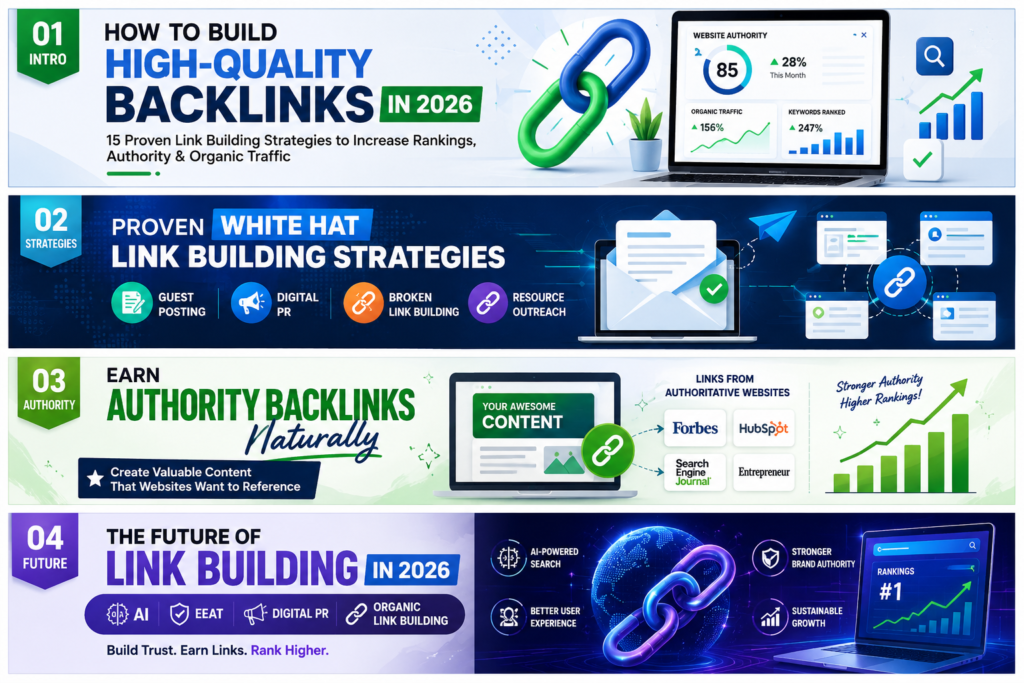
If you want to improve your website’s search rankings in 2026, earning High-Quality Backlinks should be a key part of your SEO strategy. Despite advances in AI and search algorithms, backlinks remain one of the strongest signals that help search engines determine a website’s authority and trustworthiness. However, modern link building is no longer about collecting hundreds of random links. Today, success comes from earning relevant, trustworthy, and naturally placed links from authoritative websites. In this guide, you’ll discover proven methods to build a strong backlink profile and improve your organic visibility. What Are High-Quality Backlinks? A backlink is a link from one website to another. A high-quality backlink comes from a reputable website that is relevant to your niche and provides value to users. Characteristics of quality backlinks include: For example, a digital marketing blog receiving a link from a respected SEO publication is far more valuable than multiple links from unrelated websites. Why Backlinks Matter in 2026 Search engines use backlinks as trust signals. When reputable websites link to your content, it indicates that your information is useful and credible. Some major benefits include: A strong backlink profile can often be the difference between ranking on page one and getting lost among competitors. 10 Proven Link Building Strategies 1. Create Link-Worthy Content The best way to attract links is by publishing content that people genuinely want to reference. Comprehensive guides, original research, industry statistics, and case studies tend to earn natural links over time. 2. Guest Posting on Relevant Websites Guest posting remains one of the most effective White Hat Link Building methods. Focus on contributing valuable content to reputable websites within your niche rather than publishing on low-quality blogs. 3. Use Digital PR Digital PR helps you earn mentions and links from news websites, magazines, and industry publications. Original studies, surveys, and expert insights often attract media attention and valuable Authority Backlinks. 4. Broken Link Building Find broken links on relevant websites and suggest your content as a replacement. This strategy helps website owners improve their user experience while creating an opportunity to earn backlinks. 5. Resource Page Outreach Many websites maintain resource pages that link to helpful tools and guides. If your content provides value, you can reach out and request inclusion on these pages. 6. Analyze Competitor Backlinks Studying competitor backlink profiles can reveal valuable opportunities. Tools like Ahrefs and SEMrush help identify websites that may also be interested in linking to your content. 7. Create Free Tools and Resources Useful tools, templates, calculators, and checklists naturally attract Free Backlinks because people enjoy sharing practical resources. 8. Participate in Expert Roundups Contributing expert opinions to industry roundups can increase your visibility and earn links from relevant publications. 9. Appear on Podcasts and Webinars Podcasts and webinars often publish guest profiles and show notes that include website links. These mentions can contribute to a healthy backlink profile. 10. Build Strategic Relationships Networking with industry professionals, businesses, and organizations can create long-term opportunities for collaboration and natural link acquisition. Common Backlink Mistakes to Avoid Many websites struggle because they focus on shortcuts rather than sustainable growth. Avoid these common mistakes: A few relevant links from trusted sources are often more valuable than hundreds of weak links. Best Backlink Tools The right tools can simplify your link-building efforts and help uncover new opportunities. Ahrefs One of the most popular platforms for backlink analysis, competitor research, and link opportunity discovery. SEMrush Provides backlink audits, competitor analysis, and toxic link monitoring. Moz Pro Offers valuable metrics and backlink tracking features. Majestic Known for its Trust Flow and Citation Flow metrics that help evaluate link quality. Google Search Console A free tool that allows website owners to monitor incoming links and overall search performance. The Future of Link Building As search engines become more sophisticated, link building will continue evolving. The focus is shifting toward quality, expertise, and genuine authority. Key trends shaping the future include: Businesses that prioritize authentic relationships and useful content will continue to benefit from sustainable rankings. Frequently Asked Questions How many backlinks do I need to rank? There is no fixed number. The quality and relevance of your backlinks matter more than the total quantity. Are Free Backlinks useful? Yes, provided they come from reputable and relevant websites. Quality should always be the priority. What are Dofollow Backlinks? Dofollow Backlinks pass authority from one website to another and can contribute to improved rankings. Is guest posting still effective in 2026? Yes. Guest posting remains one of the most reliable methods for earning quality links when done on authoritative websites. Can bad backlinks harm SEO? Yes. Spammy or manipulative links can negatively affect your website’s reputation and performance. Conclusion Building High-Quality Backlinks in 2026 requires a strategic and long-term approach. Instead of chasing large numbers of links, focus on creating valuable content, building industry relationships, and using ethical outreach methods. Techniques such as guest posting, digital PR, resource page outreach, and competitor analysis can help you earn relevant links that support sustainable growth. By following these proven practices and avoiding outdated tactics, you can strengthen your backlink profile, improve search visibility, and achieve lasting SEO success.
Google March 2026 Spam Update: What Changed & How to Recover Your Rankings
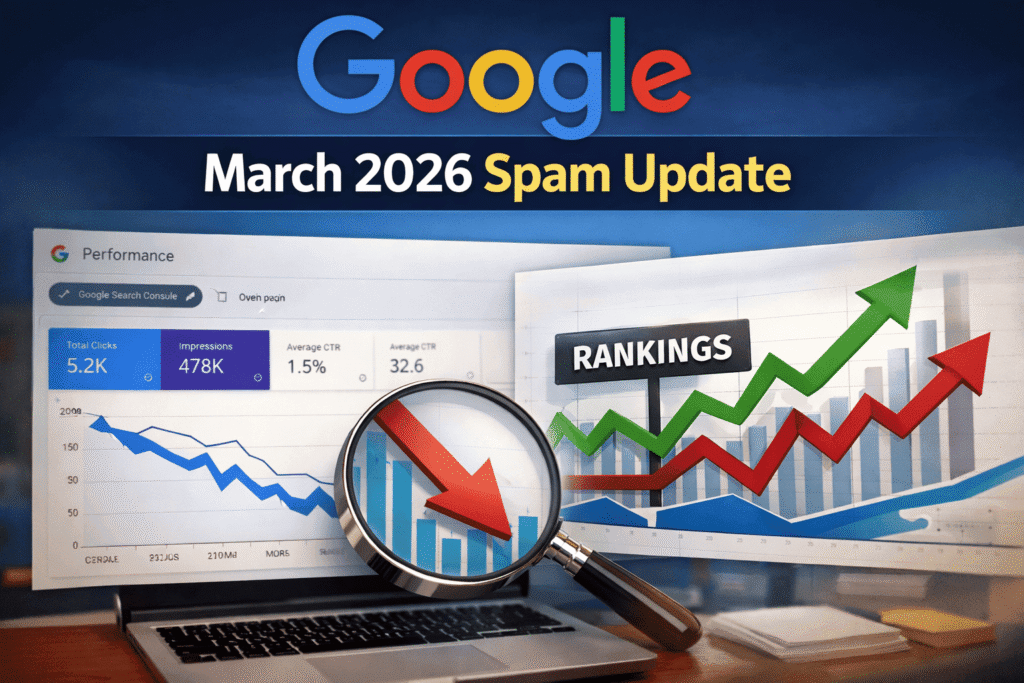
The Google March 2026 Spam Update has created massive fluctuations in website rankings across multiple industries. Many site owners reported sudden traffic drops, while others saw unexpected growth. If your website is affected, understanding this update is the first step toward recovery. In this blog, we’ll break down what actually happened, why rankings dropped, and what you should do next to regain your position in Google search. What Is the Google March 2026 Update? Google regularly updates its algorithm to improve search quality and remove low-value content. These updates can be broadly categorized into: The March 2026 changes appear to be a mix of both — focusing heavily on content quality, spam detection, and user experience improvements. Why Many Websites Lost Traffic If your traffic suddenly dropped, you are not alone. Several factors likely contributed: 1. Low-Quality or Thin Content Google is prioritizing content that genuinely helps users. Pages with: are being pushed down in rankings. 2. AI-Generated Content Abuse AI content is not banned — but mass-produced, low-quality AI content is being filtered out. 3. Weak E-E-A-T Signals Google now gives more importance to: If your website lacks author details, credibility, or real-world experience, rankings may decline. 4. Over-Optimized SEO (Spam Signals) Techniques like: are being detected more aggressively. Key Changes in the March 2026 Update Here are the biggest shifts observed in this update: ✔ Content Quality Over Quantity Publishing 100 low-quality articles no longer works. One strong, helpful article performs better. ✔ Search Intent Matters More Google is rewarding pages that directly answer user queries clearly and completely. ✔ Technical SEO Still Important Factors like: continue to impact rankings. ✔ Increased Ranking Volatility Many websites experienced major fluctuations because Google recalibrated how it evaluates content quality across all niches. Signs Your Website Was Hit You may be affected if you notice: How to Recover After the Update Recovery is possible — but it requires a smart SEO strategy. 1. Improve Content Quality 2. Remove or Fix Low-Value Pages 3. Build Trust & Authority 4. Optimize for User Experience 5. Focus on Real SEO (Not Tricks) Avoid: Instead, focus on: Important Truth: It’s Not a Penalty Many people think Google “penalized” their site — but that’s not always true. In most cases:👉 Your competitors improved👉 Google changed ranking signals So your site simply became less relevant compared to others. Pro SEO Strategy for 2026 If you want stable rankings in the future, follow this: Final Thoughts The Google March 2026 update is a clear signal: 👉 Shortcuts no longer work👉 Quality is everything👉 User-focused content wins If you adapt to these changes, your website can not only recover but grow even stronger in search rankings.