When you start the process of finding a dentist to visit, it may be before you even see the front door of the clinic. Patients shop for dentists in their area, look at the services provided, read reviews, visit websites and see what procedures are offered and if they feel at ease with their choice of services.
This all means that digital marketing for dental clinics is vital to a dental practice. Having an easy to find site, providing clear explanations of treatment, helping clients to trust the practitioner and reducing the journey from marketing to booking can all be achieved.
Still, digital marketing isn’t just about making a post on social media or paying for ads. Any practice deserves a connected digital approach that integrates its website SEO local search content paid marketing, social media, reputation management and patient follow-up.
The best strategy also changes with the nature of the dental practice. An inexperienced general dentist might wish to create a broader mix of dental patients, while a practice offering orthodontics implants, paediatrics, or cosmetic dentistry might prefer to target specific patient groups.
Here is a summary of how dental practices can leverage digital marketing to the maximum, what channels to focus on, how to generate enquiries and what to track.
What Does Digital Marketing for a Dental Clinic Include?
Digital marketing for dental clinics is promoting your dental practice using online platforms to connect with potential patients, promote your services, establish credibility and help appointment inquiries.
How does a practice exist digitally?A presence on the web including a website, Google Business Profile, search engine rankings, social media accounts, educational material, reviews online, emails, and sponsored ads.
Each channel comes with its own set of expectations. It is not reasonable to be on every possible channel just for having a presence there.
| Digital Channel | Main Purpose | Role for a Dental Clinic |
|---|---|---|
| SEO | Organic visibility | Help potential patients find relevant services |
| Local SEO | Local discovery | Reach people searching for dentists nearby |
| Website | Information and conversion | Explain treatments and encourage enquiries |
| Content marketing | Education | Answer common dental questions |
| Google Ads | Paid visibility | Reach relevant high-intent searches |
| Social media | Awareness and engagement | Demonstrate the practice and educate audiences |
| Reputation management | Trust | Manage reviews and patient feedback |
| Email marketing | Communication | Maintain appropriate patient relationships |
| Marketing automation | Follow-up | Organise enquiries and communication |
Connecting them to each other is the most likely route to the strongest results rather than considering them as separate campaigns.
For instance, locate a dentist (Google it), follow links to a practice website, read about a procedure, consult reviews, scan social media sites then call the practice. Every step may impact the ultimate choice.
How Should Dental Clinics Build a Digital Marketing Strategy?
The goal of a practical dental marketing strategy should be directed by the goals of the practice and the patients that it wishes to attract.
A clinic might wish to encourage enquiries for general appointments, sell a certain treatment, attract patients from the local area, make more people aware of a new service or strengthen recognition of an existing service.
The channels and content used should be guided by these aims.
The patient journey can be viewed as:
Awareness → Research → Consideration → Enquiry → Appointment → Patient Experience → Retention.
Build the Digital Foundation Firs
The website should make it easy for visitors to understand:
- What type of dental practice it is
- Where the clinic is located
- Which treatments are available
- Who the treatments are suitable for
- How to contact the practice
- How appointments can be requested
- What patients can expect from the clinic
Important treatment and service pages should be easily navigable as for services that are significant for the practice.
Mobile devices: the website must be functional for mobile devices. A prospective patient who searches for the practice on a search engine should be able to access the practice details and contact details easily.
How Can SEO Help Dental Clinics Attract New Patients?
What SEO for dental clinics means SEO for a dentist may help a practice to assist show up when people are looking for dental treatment or information about dental treatment in search results.
Search behaviour can vary widely from general search expressions to very specific treatment searches. One type of search may be for a dentist in the local area, while another may be for more specific treatment or dental problems.
How do you use SEO? The goal of SEO is to know how to use keywords effectively on a website to optimize a position in search rankings. It’s not just stuffing keywords throughout a website.
Create Useful Pages for Important Dental Services
A dental practice should consider dedicated pages for important services rather than placing every treatment on a single page.
Depending on the practice, these could include:
- General dentistry
- Dental check-ups
- Teeth cleaning
- Dental implants
- Orthodontic treatment
- Cosmetic dentistry
- Teeth whitening
- Root canal treatment
- Children’s dentistry
- Emergency dental care
The accurate pages should be pages of evidence of services actually offered by the practice;
For each page, there should be an explanation of the service that is accessible and easy to understand, the patient should be given answers to questions they may have, and it should be obvious as to what the next step is.
Such as a treatment page giving an outline of what the treatment is about, things patients might want to mention to the dentist, what the consultation is like and providing contact details for the clinic.
Use Content to Answer Patient Questions
A dental clinic could create articles or resources around questions such as:
- What happens during a routine dental check-up?
- How should patients prepare for a dental appointment?
- What should someone ask before choosing a dental treatment?
- What is involved in a particular procedure?
- How can people maintain good oral hygiene?
- When should someone consider speaking with a dentist?
Healthcare content must stay focused on education and keep within reasonable bounds of responsibility. It should not try to identify specific patients or make unwarranted promises about treatment.
Significant point: take a good look at the dental material and see if it makes sense; be aware of the treatments, pathologies , procedures, risks, and patient care that go with it.
Why Is Local SEO Important for Dental Practices?
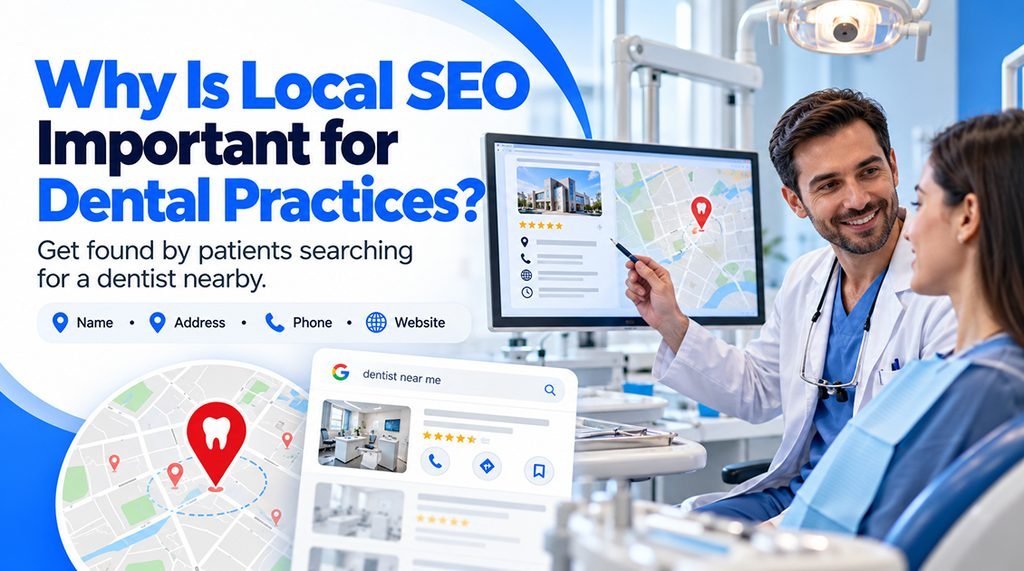
Locally-optimised SEO may be mostly significant for numerous dental practices, as many individuals might be on the hunt for the dentist that is local to them.
A practice should ensure that their NAP (name address phone number, postal/zip code) is accurate and consistent on all relevant online directories.
This includes the:
- Practice name
- Address
- Phone number
- Website
- Opening information
- Relevant business category
- Service information
Reviews Can Support Local Trust
Reviews can also shape the perception of the potential patients.
A clinic should be able to garner authentic patients’ experiences and respond professionally to comments. The responses should be appropriate and should not disclose confidential patient details.
What can be missed yet is that if you do receive criticism in patient feedback, there may be a cause for concern elsewhere in the practice; in choice of marketing, in appointment booking, waiting times or other issues of patient service.
Replication the goal of reputation management should be, create trust from real experience, not to fake online image.
Techniques for dental content marketing to attract and educate patients.
You can use dental content marketing to address questions that a patient has before they are ready to make an appointment.
Patients frequently do some research on dental treatment before contacting a clinic. They might be looking for information on a particular procedure, want to compare different options or wonder what questions to ask their dental practitioner.
This can be made a little easier with the availability of useful content.
A dental practice can develop content around:
- Oral hygiene education
- Treatment explainers
- Preventive dental care
- Common dental questions
- Treatment preparation
- Aftercare information where appropriate
- Children’s dental care
- General dental health topics
- Practice and service information
Connect Educational Content With Services
Content adds to the commercial usefulness if, during providing it, it builds a rational bridge from information to effective services.
Whether in practice or outside of it, an educational article on a certain treatment can include a link to the appropriate treatment page. An educational article on general topics such as oral health can also point the reader to suitable preventive services.
The progression should feel natural:
Question → Useful information → Understanding → Relevant service → Appointment enquiry
How Can Social Media Marketing Support Dental Practices?
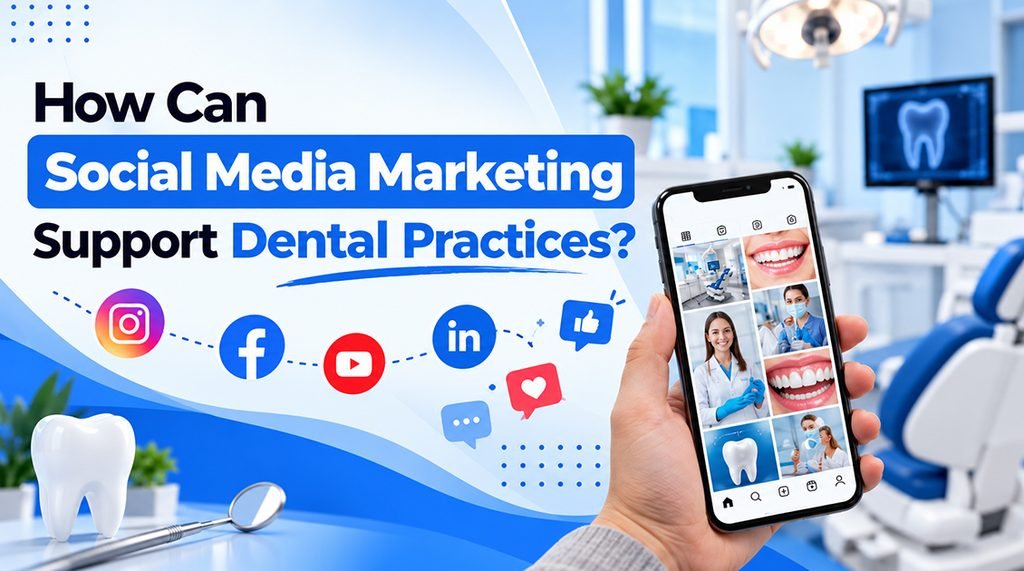
Social media marketing for the dental practice is an effective tool to stay visible, inform your audience, and show off the patient experience.
The dental treatment is a visual and trust service, in this way it can be used on social media to show the practice surroundings, to introduce the practitioners and to explain the treatment at a level that is suitable for the consumer.
A social media strategy may include:
- Dental education
- Oral hygiene tips
- Dentist introductions
- Clinic and facility information
- Treatment explainers
- Frequently asked questions
- General awareness content
- Practice updates
- Appropriate community-focused content
Use Social Media to Build Familiarity
People can feel even more anxious if they haven’t been for a while or are not sure what to expect.
Having the clinic environment, what someone will see and experience, and the team in the practice all help to make the practice less unfamiliar before anyone is on the door step.
Listening to questions from the audience and topics that require an explanation is another benefit of social media.
But individual patient concerns should be addressed through appropriate patient private channels instead of using the dental practice page to speak about private dental details.
When Should Dental Clinics Use Google Ads and PPC Advertising?
PPC marketing for dental practices. Paid advertising helps practices find people on the internet who are clearly interested in your services.
For example, your clinic may wish to only promote specialised services with proven search demand. The campaigns that are suitable will vary per the services and products you provide, the market you operate in, your competition, market demand, budget, and business goals.
Advertisements may help you get to the people that are already looking for a dentist or specific service, but it’s only part of the overall process.
Your landing page also has to relate to what they searched for.
Match the Advertisement to the Landing Page.
Say there’s an ad for a particular dental service. Rather than sending someone straight to the home page, directing them to a page about that exact service will be more meaningful.
A simple path could be:
Search → Advertisement → Relevant Treatment Page → Information → Enquiry
The landing page should explain the service clearly and provide an appropriate way to contact the practice.
Advertising should also be measured beyond clicks.
Useful metrics can include:
- Relevant enquiries
- Appointment-related actions
- Conversion rate
- Cost per enquiry
- Search terms
- Landing page performance
What Should a Dental Website Include to Generate Enquiries?
A dental website should help visitors understand the practice and take the next appropriate step.
Potential patients may want to know:
- Which treatments are available?
- Where is the clinic?
- Who are the dentists?
- How can I contact the practice?
- How can I request an appointment?
- What should I expect during a consultation?
- Does the clinic provide the treatment I am looking for?
- What information should I know before contacting the clinic?
These questions should be easy to answer.
Create Treatment-Specific Landing Pages
Dedicated treatment pages are helpful in informing both users and search engines about the area a practitioner practices in.
For example, a clinic could create separate pages for:
Dental Implants
Justify the service why it is given, identify the approach a person needs, things to think about, and how to ask.
Orthodontic Services
Describe the different types of orthodontic treatment available at our practice, and how to discuss your needs.
Teeth Whitening
Offer relevant details about the service and encourage visitors to ask for an appointment or request a quote.
The key can never represent the array of treatments that the practice offers. The actual content should always represent the treatments that practice offers.
Keep the Conversion Path Simple
It does not require a potential patient to page after page to select the best option.
Given the practice’s systems, this could include:
- Request an Appointment
- Call the Clinic
- Send an Enquiry
- Contact the Practice
- Get Directions
The call to action should match what the clinic can actually support.
How Can Email Marketing Help Dental Practices?
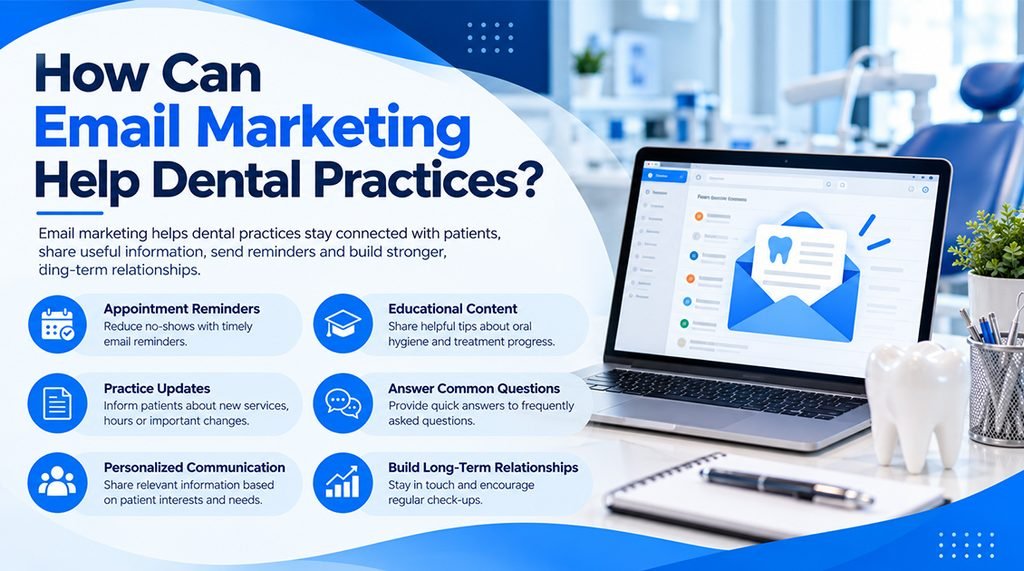
Dental email marketing is suitable where the email is to support the communication with the individual who has made a voluntary provision of contact details and where this is appropriate.
Examples of educational messages include email reminders of upcoming meetings; educational messages about a client’s progress; emails for practice updates; educational information pertinent to a client’s service; appointment reminders and information; and other appropriate messages.
A simple educational sequence could include:
- A welcome or confirmation message.
- Useful information relevant to the person’s interest.
- Answers to common questions.
- Relevant practice or treatment information.
- An appropriate next step.
The aim should be to be useful, to not flood people with ongoing marketing stuff.
Existing patients may also be communicated effectively on practice updates; available educational materials; reminders or other information as determined by the clinical practice standards and the clinic’s needs.
Why Does Dental Reputation Management Matter?
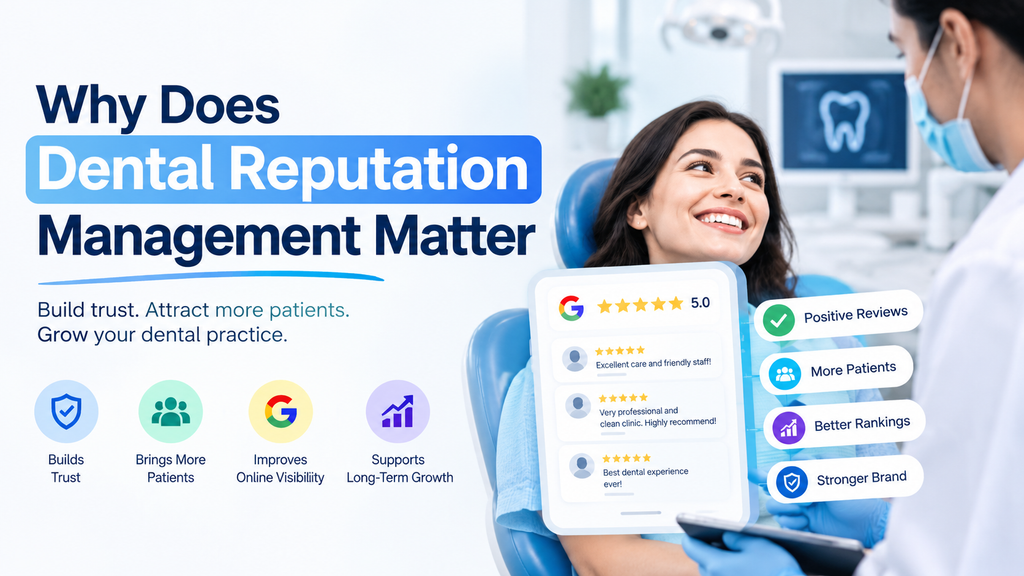
Of course, trust can be a big part affecting whether or not a person is willing to contact a dental practice. As a result, reputation management of the dental practice has become an important aspect of online marketing.
People considering treatment might read reviews in advance of booking an appointment.
Monitoring feedback, responding as necessary and recognising trends.
Handle Patient Feedback Carefully
Dental practices need to be mostly cautious about protecting customers’ privacy when answering to public feedback.
A clinic would never disclose private information about treatment or patient’s sensitive information in a public reply.
By responding professionally, an individual can acknowledge this and invite the person to continue the discussion in a more appropriate private forum.
The goal is not to cleanse the practice of all negative comments. The goal is to show that this practice values patient feedback and handles complaints professionally.
Dental Marketing Automation is a practical way to Increase Patient Numbers, but how?
Dental practices are subjected to enquiry traffic from their website, Google Ads, Twitter and Facebook profile telephone, which could be entered into various systems if not centrally managed. When the practice manages the enquiry manually, such activity will be uncoordinated.
The automation of marketing to dentistry can strengthen the management of repetitive communication and leads.
A basic workflow could look like:
Website Enquiry → Lead Recorded → Confirmation → Follow-Up → Appointment
For marketing purposes, leads might be categorised according to their status, such as:
- New enquiry
- Information requested
- Appointment requested
- Appointment scheduled
- Follow-up required
Automation, in this context, should be used to help the practice team, not cut down on the need for personal contact in the right circumstances. Dentistry is personal and many of the potential patient population will want to speak to a person before they commit to booking.
What Should Dental Clinics Measure in Digital Marketing?
| Metric | What It Helps You Understand |
|---|---|
| Organic traffic | Whether SEO is attracting visitors |
| Local search visibility | Whether nearby audiences can discover the practice |
| Treatment-page visits | Interest in specific services |
| Enquiries | Whether visitors are taking action |
| Qualified enquiries | Whether incoming prospects are relevant |
| Conversion rate | How effectively visitors become enquiries |
| Cost per enquiry | Efficiency of paid campaigns |
| Appointment-related actions | Progress towards patient acquisition |
| Social engagement | Audience interaction |
| Email engagement | Response to email communication |
A Practical 30-Day Digital Marketing Plan for a Dental Clinic
A dental practice does not need to implement every marketing activity simultaneously. A phased approach can make the process easier to manage.
Days 1–7: Review the Digital Foundation
Start by reviewing the practice’s existing online presence.
Check:
- Website usability
- Mobile experience
- Treatment pages
- Dentist and practice information
- Contact details
- Appointment pathways
- Google Business Profile
- Existing reviews
- Analytics and tracking
Fix important usability and information gaps before increasing marketing activity.
Days 8–15: Improve SEO and Content
Then, determine which searches and questions are most pertinent to the practice.
Visit these key pages about the treatments and should assess whether they tend to include adequate amounts of good information.
Next, formulate content based on the real queries of patients and related dental issues.
The intention is to produce a helpful information resource, rather than numerous pages composed mainly for keyword insertion.
Days 16–23: Strengthen Patient Acquisition
Once the foundation is in place, consider suitable acquisition channels.
This may include:
- Relevant Google Ads campaigns
- Local SEO improvements
- Social media campaigns
- Treatment-specific landing pages
- Content promotion
- Clear appointment calls to action
Paid campaigns should be properly tracked before a significant budget is committed.
Days 24–30: Measure and Optimise
For example:
Good traffic + few enquiries
Review the relevance of the traffic and the website’s conversion path.
Good enquiries + poor appointment progression
Review the follow-up and appointment process.
High advertising cost + low-quality enquiries
Review targeting, search terms, messaging, and landing pages.
The first month should establish a measurable process that can be improved over time rather than being treated as a one-time campaign.
Common Digital Marketing Mistakes Dental Clinics Should Avoid
Relying Only on Social Media
There are plenty of uses for social media to increase awareness, but branding and awareness may not need to constitute the full marketing plan. Using search, local visibility websites content, advertising, and managing your reputation to drive patients to your practice.
Using the Same Page for Every Dental Service.
A generic services page may be too vague for the person looking for a specific treatment, dedicated pages can make the website easier to understand and align more with the person’s search query.
Ignoring Local SEO
Most dental practices operate within a geographical location. Inaccurate data or a lack of local presence can prevent new and existing patients from discovering you.
Publishing Content Without a Clear Purpose
Writing articles due to the “insert X more article” mentality. This can generate, in some cases, paragraphs of content that are not mainly valuable.
Before publication, there is a way to understand a paragraph by asking what a paragraph is about and what the reader has to grasp after reading it.
Overpromoting Dental Treatments
Dental marketing is an effective way to build trust and not regulate social media content in advertising. Dental treatment messaging should be transparent and responsible when highlighting outcomes.
Failing to Track Enquiries
Traffic and social engagement can be flashy but may deliver far fewer quality enquiries. Mapping the path from digital discovery to enquiry can give a better gauge of marketing impact.
Frequently Asked Questions About Digital Marketing for Dental Clinics
What do we mean by digital marketing when we refer to a dental clinic?
Online marketing for dental clinics..Online marketing activities for dental practice, like SEO, local SEO website content marketing, Google Ads, social media, email, and reputation management are designed to increase awareness, to educate potential patients about the dental services and to generate trust, which eventually enable patients contacts.
Is your dental clinic able to bring patients to your practice through the Internet?
A practice may use local SEO, treatment specific website pages, search engine optimisation, Google Ads, social media, patient education, online reviews and simple booking routes. Correct use of any of these will depend on practice goals, treatments , clients, area, and resources.
Are Google Ads Eligible for Dentists?
Google Ads works well if your dental practice is targeting people searching for relevant products and services. This is before a large marketing budget is spent, with the back-end process ready to convert and capture contact details.
How much should the dental practice place on a digital marketing investment?
A budget is not “one size” fits all for every practice. Budgets are dependent on what activities you are promoting and require varying levels of spend given what you are doing with your marketing location, your competition, website, and marketing needs advertising website content and SEO.
The budget is a practice’s achievable plan that is tied to the practice’s goals and the resources needed to successfully implement the plan.
What is a dental digital marketing agency offering?
The services offered for dental marketing vary from agency to agency, but typically encompass SEO, local SEO, content marketing, Google Ads, social media marketing, optimisation of websites, lead generation, reputation management, analytics, and marketing automation.
Must clarify the practice to be evaluated on its approach to the number communication reporting, understanding of the practice’s needs and reaching realistic expectations.
How RG Startup Can Support Dental Digital Marketing
It takes a lot of ongoing effort to build and sustain a successful dental marketing system. Continual updates to SEO contents, website optimisation, social media, paid advertising, local search, review/ reputation management and lead generation are often needed.
The digital marketing services that RG Startup may be able to offer dental clinics and dental practices are listed below, with the option for each of these areas to be provided as deemed necessary:
Should start for understanding current web presence, patient population, services provided website search visibility and patient acquisition goals.
You can then concentrate on the critical areas, the most in need, which could be boosting local presence, improving treatment pages, content development, relevant PPC campaigns or boosting the process of online enquiry to appointment.
Final Thoughts on Digital Marketing for Dental Clinics
Digital marketing for dental clinics is not just about attracting more visitors to a practice’s website. It is about attracting the right visitors to that practice, informing them about the practice, providing them with accurate information, alleviating their concerns, and encouraging the correct next step to be taken.
Begin with the basics; an attractive website and accurate locals, a useful series of treatment pages, prominent contact methods (not just a form) and a simple appointment process. Alongside this, invest in organic visibility through SEO and content, build practice awareness with social media, use it for knowledge and familiarity raising, consider paying to attend advertising where appropriate to practice ambitions and ensure a professional, consistent approach to online reviews.
Above all, make sure to identify the outcome of the new practice. Traffic sources are valuable but relevant phone calls, appointment booking and new patient figures will give a far more accurate picture of if the marketing is helping the practice to achieve its goals.
When properly coordinated, these activities turn digital marketing into an organized approach to increasing awareness, establishing communication with potential patients and aiding practice growth.