Ask Google, ChatGPT, or Perplexity a question today and you’ll often get a final answer before the first link loads. And if that’s not your website, someone else’s is. Here’s our guide to AEO, how it works and what you can do about it. Step-by-step.
Answer Engine improvement Explained: What AEO Really Means.
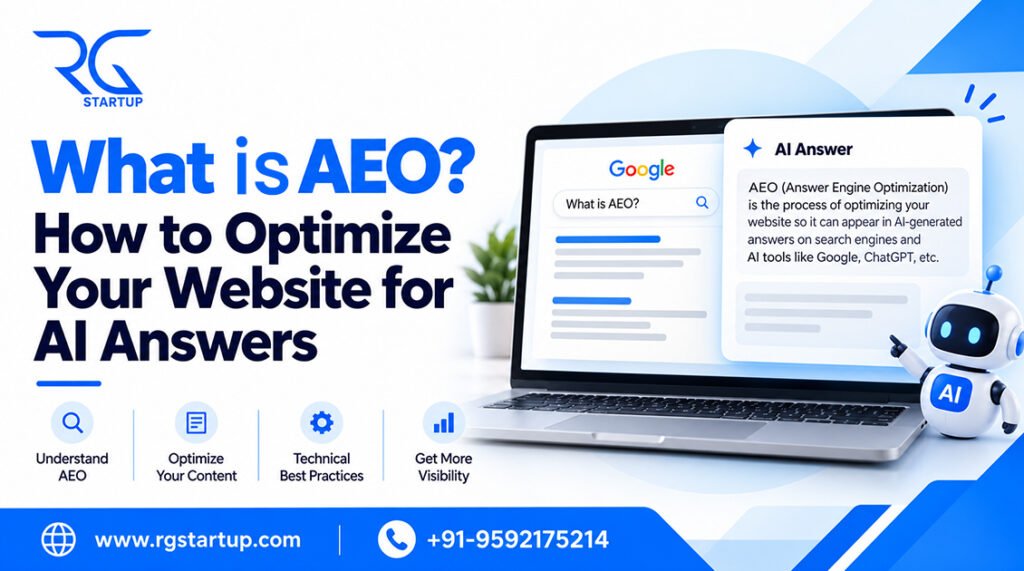
Answer engine improvement (AEO) is all about creating the content that Google-powered AI tools and programs want to see and acknowledge as the correct answer to a question. We’re talking Google AI Overviews ChatGPT Perplexity, voice assistants and the answer boxes that appear at the top of search results.
It’s like the next stage of feature snippet work. The previous target was a good link. The new target is being the source the AI cites. That’s a different role, and it favors transparent, straightforward writing rather than relying on keyword manipulations. It also just so happens to favor the sort of content humans want to consume.
The New Shape of Search: Why AI Search Tuning Matters Now.
Searching was a list. You type one word, get 10 links, click on one and hope for the best. AI search largely eliminates that whole process. Language models read the prompt, determine what you’re really after, and then craft one response from data gathered throughout the internet.
The figures reveal how fast these habits are changing. A 2025 Search Engine Land survey revealed that 87% of U.S. Adults have viewed an AI-generated search snippet. By contrast, a Pew Research report found that only 8% of searches accompanied by an AI-generated search snippet resulted in a click on a regular listing.
The search is still out there. It just doesn’t always lead to the door anymore. Which is why AI search tuning went from “watch this space” to something you need to act on. Getting the click isn’t the end game anymore. Becoming the source of the AI citation is.
Where Do People Actually Use Answer Engines?
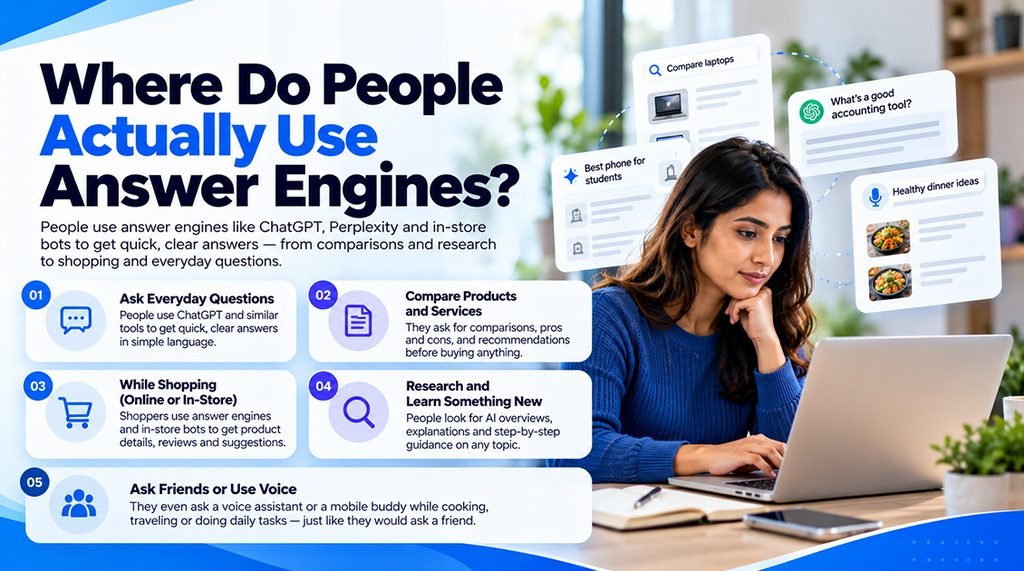
Anyone not just Google a person could ask ChatGPT for a comparison, take a look at an AI Introduction even though shopping at a retail outlet or utter out a inquiry in excess of to the mobile phone buddy as you go in the course of meal prep. Shoppers use in-store bots even though buying at a retail store. Folks use Perplexity for the reason that it shows them its means.
The Throughline is intent. They want an answer, not a playlist. And they’re asking those longer, wordier questions they would have typed with a keyboard similar to “what’s a good accounting tool for a five-person agency?” rather than “accounting software”.
Write your page in plain English. Readers want to know about you and your business as simply as possible, especially when they’re searching.
AEO, GEO, AIO and LLMO: Cutting Through the Jargon
There is a new acronym every few weeks and most agencies are willing to give you a different one. Here’s the fast version.
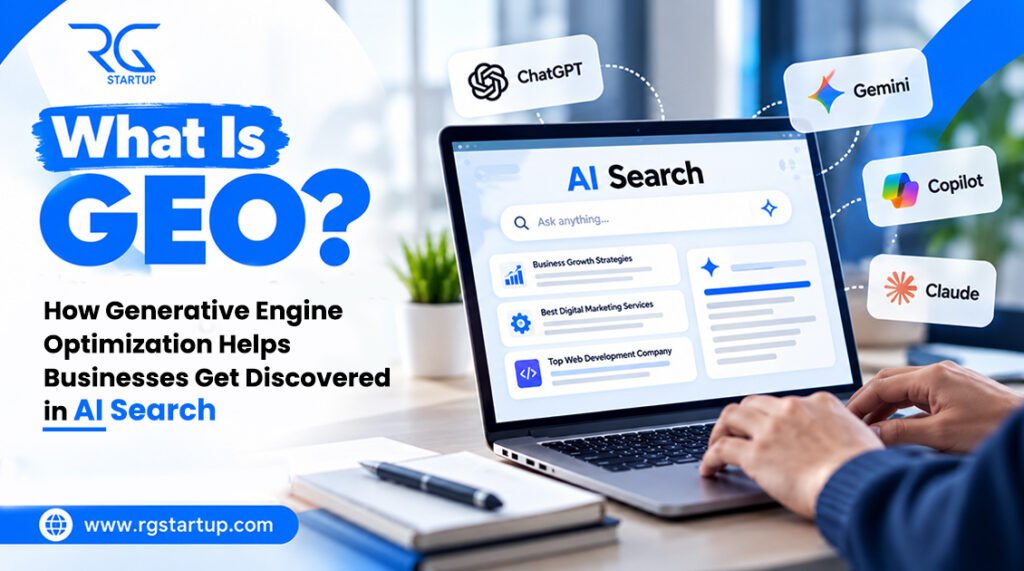
AIO the broadest search intent optimizing content for all discovered and usable by any AI system. AEO more focused – answering questions (eg snippets and voice answers). GEO – (generative search enhancement) is when an LLM tool (e.g. ChatGPT or Gemini) generates a new answer rather than providing a static snippet.
Names are close, and some agencies throw them out there on purpose to stay different. Don’t get hung up.
They’re all just a different way of saying the same shift from “how do I rank?” to “how do I get cited?”
AEO vs SEO: Why You Need Both
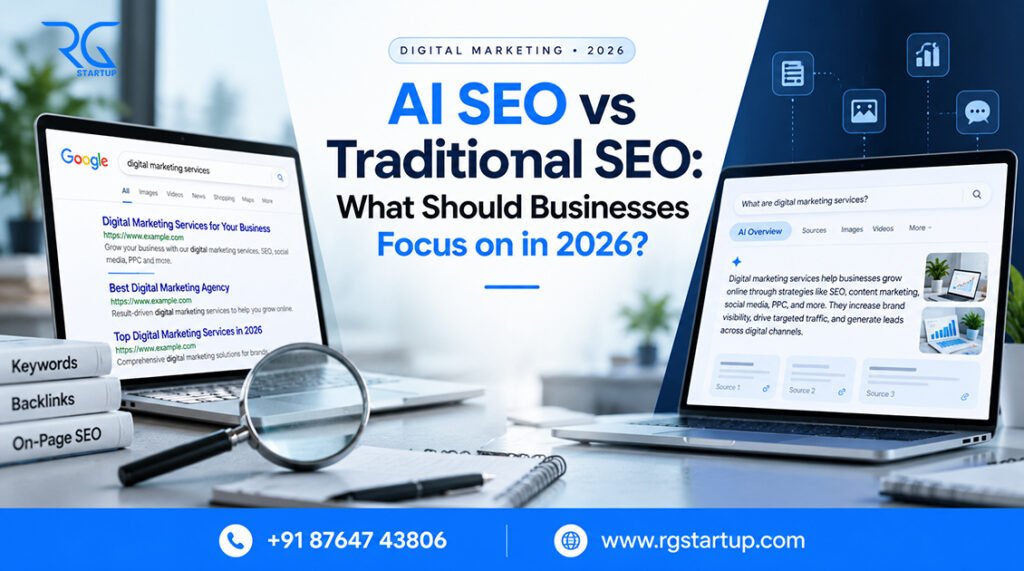
The AEO vs SEO discussion is mostly a convenient false fight. SEO makes sure your pages are crawled, indexed, and ranked. AEO determines how the material on those pages is brought into answers. If you’re not crawlable, you can’t be cited: those fundamental tech areas still matter: site speed, mobile usability, interlinking, and a clean structure.
They appeal to various audiences at various times. SEO is very much still the king when someone is prepared to buy or book high intent searches. AEO is someone who’s still doing their research.
| Factors | SEO | AEO |
|---|---|---|
| Main goal | Rank pages and earn clicks | Be selected as the direct answer |
| Where it shows | Search result listings | AI Overviews, snippets, chatbots, voice |
| Success looks like | Position, traffic | Citations, brand mentions, recall |
| Content style | Full pages, broad coverage | Direct answers inside well-structured pages |
Today one person might get your brand in an AI answer and pass over your click to search for your name tomorrow. You won’t find that first hit in your analytics, but it counts.
How Do AI Engines Decide What to Cite?
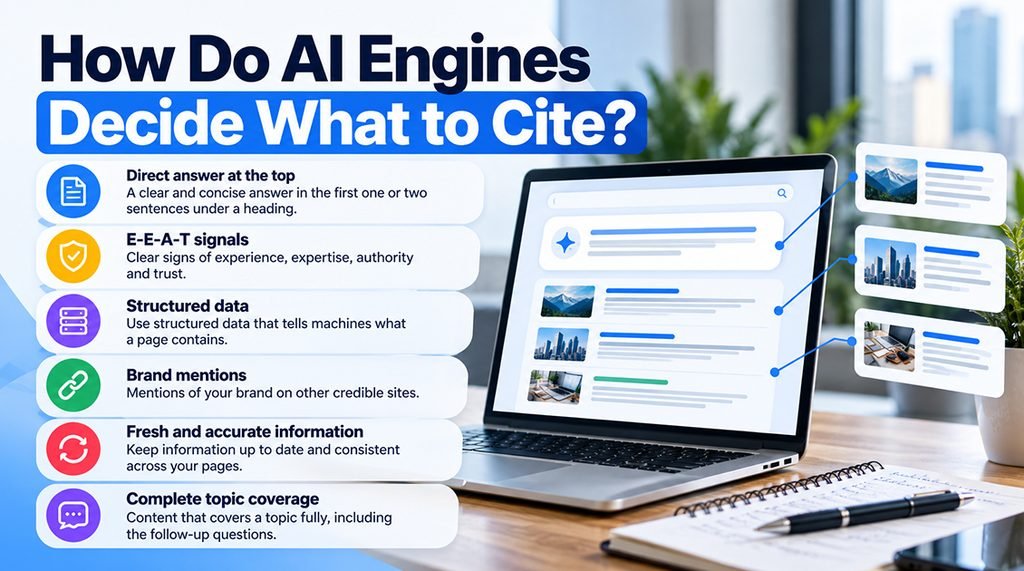
No official formula exists, but the trends remain the same throughout the studies. These are the common AI search ranking factors we keep seeing:
- A direct answer in the first one or two sentences under a heading
- Clear signs of experience, expertise, authority and trust (E-E-A-T)
- Structured data that tells machines what a page contains
- Mentions of your brand on other credible sites
- Fresh, accurate, consistent information across your pages
- Content that covers a topic fully, including the follow-up questions
See what’s not there: keyword density. Answer engines don’t browse for repetition, they extract. A page that hides its answer halfway down the page will lose to one that offers it upfront.
Content Strategy for Answer Engines: Build Pages Worth Citing.
A good content strategy for answer engines takes one habit. When you approach them, regard every question as a question, and get out the answer first. Follow with an explanation.
Now add something only humans are able to produce: any piece of research or data, calculation, or actual project you have completed during your career. Summaries can only refer to existing online information-they’re unable to produce insights of their own. This is perhaps the most useful of the five best AEO practices as it creates another way-beyond first-time-ever-humans and algorithms will have a special reason to quote your work more precisely.
How to Write Answers That AI Tools Can Quote.
Good writing is simple writing. . How many molecules are in a mole of gas? The answer will be given at the end!Always include an answer to the question, then give three or more points to support your answer. Convert it into a single paragraph or two, but still use good grammar and accurate spelling! No filler things such as ‘that is a good question’, an intro that takes three sentences before saying the question.
Answer each question on its own. Would that paragraph read as coherent if isolated? Explain the concepts that you introduce without replacing the body of the paragraph, and while keeping the original paragraph length. Instead of writing “it” or “that approach” five times in a row, name the subject.
Use numbered items for instructions and small tables for comparisons; use bullets and keep formatting plain. Still keep it honest; don’t break an idea into bits just to get to a nice linear order. Machines and humans sense structure can be substituted for content.
Google AI Overview Tuning and Featured Answers in AI Search.
Google AI Overview tuning is essentially solid SEO, with snappier formatting. Pages in Overviews tend to rank fairly well anyway, do a good job answering the question, and are fairly easy to scan.
Getting “featured” Answered in AI search to be selected as a featured answer, respond with a concise, self-contained answer to the specific question laid out in the question-style header immediately before the supporting content, which can include: more robust evidence sources, FAQ sections, etc.Refresh your facts old stats can get your page skipped in a flash.
Schema, Crawlability and Website Visibility in AI Search
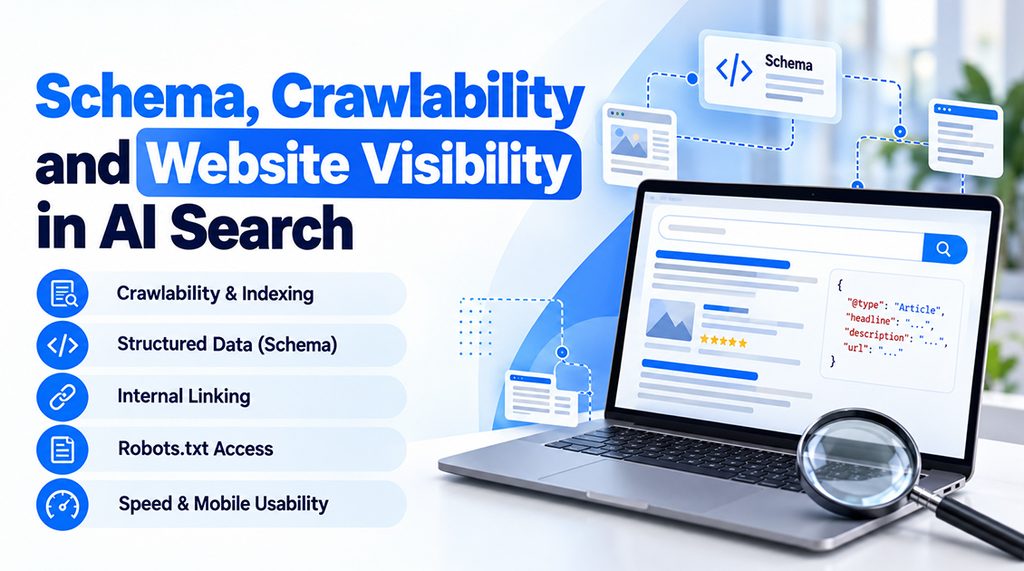
First, a few things to cover before you get into content many sites overlook these.Ensure your bots are crawling your site, ensure your prioritised pages aren’t in amongst loads of code, ensure your onsite linking makes sense and ensure you aren’t blocking the crawlers you want to with your robots.
What if my page is an article product FAQ, or How-To? Schema markup will communicate that to Google as well. Test your markup for errors with Google Rich Results Testing Tool and deploy it to your page.
Speed and mobile usability are important too. Nobody wants to visit a slow site, and that can be harder for a crawler to navigate through. It might not be pretty, but it’s the backbone of it all.
Why Brand Mentions Matter for AI Content Visibility.
Backlinks were once the ultimate sign of authority. They still matter, but more and more reports have shown us that web-wide branded mentions now account for a significant part of your visibility in AI Overviews. Generative models are trained on an immense web of text, and consistent, appropriate mentions on legitimate websites help confirm that a brand is authentic.
Just think like a PR team. If you’re releasing an article in a leading trade journal which is being referenced by others, your own unique study can be included in a popular directory, in podcasts, and in expert roundups, and your name, bio, and information all stay consistent on the Web..
That’s slow work, and that’s not a fast lie you’re telling here. But it does play out twice once in the increased trust you build with people, and then again in the increased discoverability of AI content over time.
How AI Search Is Reshaping E-commerce and Product Discovery.
The whole process from search to customer service chat is moving. It can take fuzzy searches such as “comfy, stretch-y T-shirt for yoga” and suggest light gear, and in some cases can do this without search terms. It can look at your shopping and browsing history and suggest.
And that makes sense for the shop owner. Product pages need the right specs, the right descriptions, genuine reviews, and the appropriate structuring of data for an AI shopping assistant to recommend a product.
If your pages are narrow, or not of the same width, then the other page is the one that your competitor will find easy to quote. Even the little things count: it is better to list in a few simple sentences the measurements, materials, and usage instructions of the product than hide them in a picture.
AEO Techniques for Businesses Looking to Reach AI Search Users
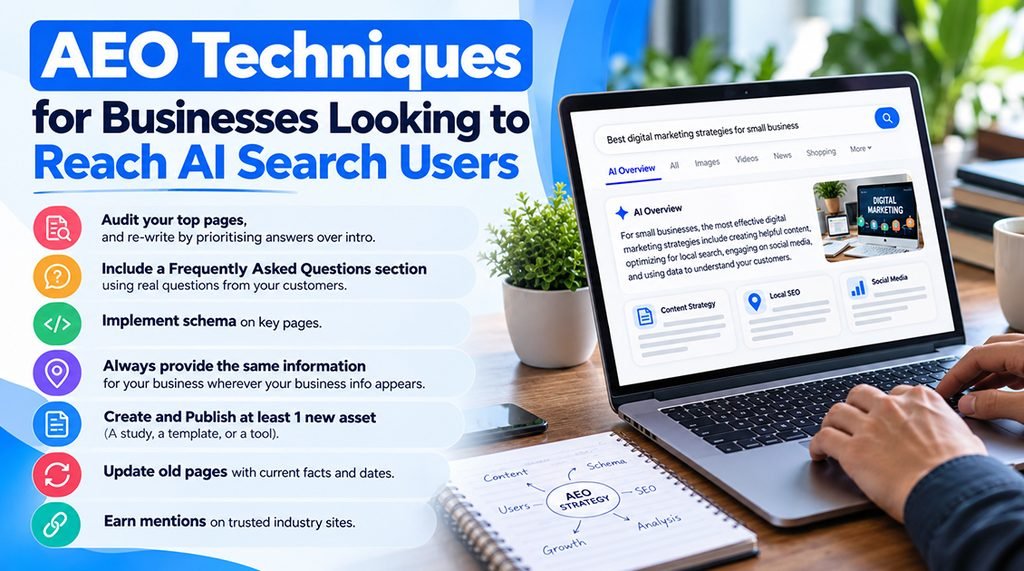
No matter your industry, you can get most of the value out of a few AEO practices for business. Begin with:
- Audit your top pages, and re-write by prioritising answers over intro.
- Include a Frequently Asked Questions section using real questions from your customers.
- Implement schema on key pages
- Always provide the same information for your business wherever your business info appears.
- Create and Publish at least 1 new asset (A study, a template, or a tool)
- Update old pages with current facts and dates.
- Earn mentions on trusted industry sites
Don’t take it all on at once. Pick three, do them well, and see how it works before tackling another.
A Simple Plan to Improve AI Search Presence
Here’s how: in week one, write down your top 15 questions that you get from potential clients (on a sales call, a support email, or a suggested Google search) , write these on a document for your website and make sure you answered them all with a short, specific answer.
2nd week: Audit your weak pages and add schema markup to the most important pages. 3rd week: Fix all technical issues such as broken links, slow site speed, crawling issues, etc. 4th week: Create and publish unique content pieces such as a small data analysis, a how-to guide or a template.
Then the test. Pose the same queries in ChatGPT, Perplexity, and Google. Record if you are visible, who is visible and why. Do this on a monthly basis.
Measuring AI Content Visibility in a Zero-Click World.
Clicks aren’t everything anymore. The individual googling you after an AI-powered answer is an assisted conversion, even if it’s not logged in your analytics standard dashboards. Track traffic track impact.
| What to track | Example metrics | Why it matters |
|---|---|---|
| AI citations | Monthly mentions across AI tools, pages cited as a source | Shows authority and topic relevance |
| Brand recall | Branded search growth, direct traffic lift | Reveals the “invisible” effect of AI exposure |
| Attribution | Customer surveys, assisted conversions | Captures the real customer journey |
Google Search Console now has an impressions and queries filter with an AI Overview. Add a simple ‘how did you first hear about us?’ question your forms, because people will tell you what the tools can’t.
Common AEO Mistakes That Hurt AI Search Results Optimization
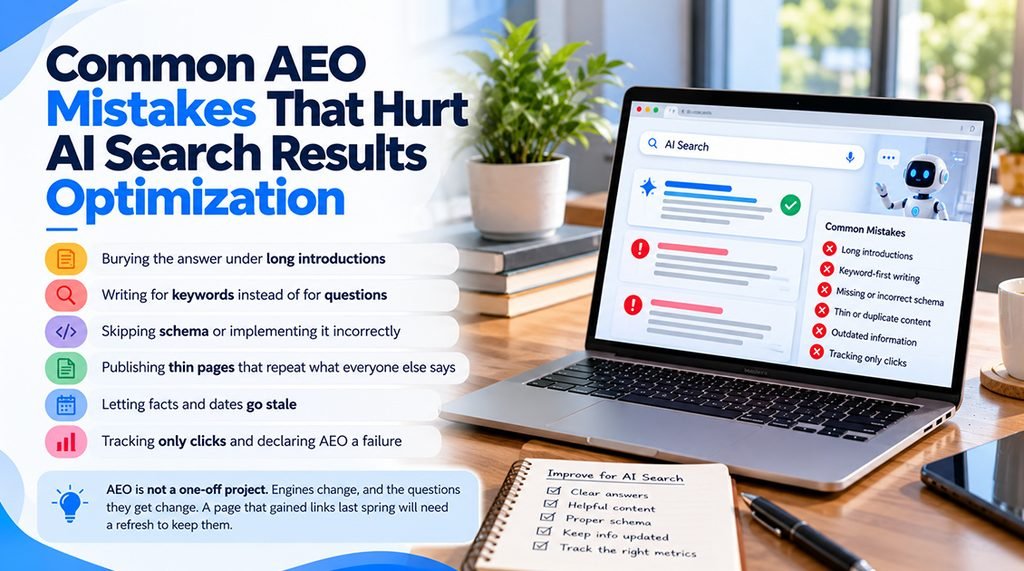
Most problems with AI search results optimization come from a few repeated errors:
- Burying the answer under long introductions
- Writing for keywords instead of for questions
- Skipping schema or implementing it incorrectly
- Publishing thin pages that repeat what everyone else says
- Letting facts and dates go stale
- Tracking only clicks and declaring AEO a failure
The other subtle mistake: treating AEO as a one-off project. Engines change, and the questions they get change. A page that gained links last spring will need a refresh to keep them.
How RG Startup Helps Businesses Improve AI Search Presence
Plenty of companies have AEO down on paper and get stuck on implementation. That’s where RG Startup comes in. We distill those above ideas into below action: structuring our content to always put answers first, mechanically reinforcing our foundations, and answer engine marketing around how real customers ask.
Your business starts at a specific point. A brand new website may require a straightforward website and really basic and simple solutions. A current site may need to improve upon one thing that’s already in place and see their AI existence. If you’re unsure where you are, RG Startup can evaluate your webpage, highlight in which AI applications are making your website difficult for them to learn and what to begin with.
Why Authority, Not Rank Will Shape the Next Generation of Search Visibility.
The age of fighting to get to that one blue link is over. What’s replacing it is more durable and harder to imitate: being the source that AI cites.
That’s quality on page, unfiltered quality content, topped with a dash of semantics, stacked on top of a reputation you’ve earned on the right sites. Then gauge your results, don’t just gauge your traffic. The agencies who attempt to separate them will get left behind. Those who do not will keep the /global scroll function alive long after what’s next comes next.
Frequently Asked Questions About AEO
What is the answer to engine tuning?
AEO is the practice of generating content that the search engine’s AI-powered search engines will bring up to provide a direct answer to a search query. It is based on AIs, featured snippets and voice search results.
Is AEO replacing SEO?
Not exactly. SEO keeps your website visible and crawlable. AEO has your content selected as an answer.
What is generative engine improvement (GEO)?
GEO is all about the data that have been quoted by chatbots such as ChatGPT, Perplexity, and Gemini that create new answers. AEO is all about answering through ‘answer boxes’ snippets AI Overviews and voice results.
Are AI Summaries impacting website traffic?
Yes. An SEO.com keyword analysis discovered decreases in click through of as much as 34% for the high-ranking outcomes. Yet a model presence in the AI options may still finally lead to direct searches and conversions.
How long does AEO take to show results?
It depends. Per some users, an automated citation can be between three and eight weeks behind the very latest, based on the crawl schedule of the engines when they crawl your content.