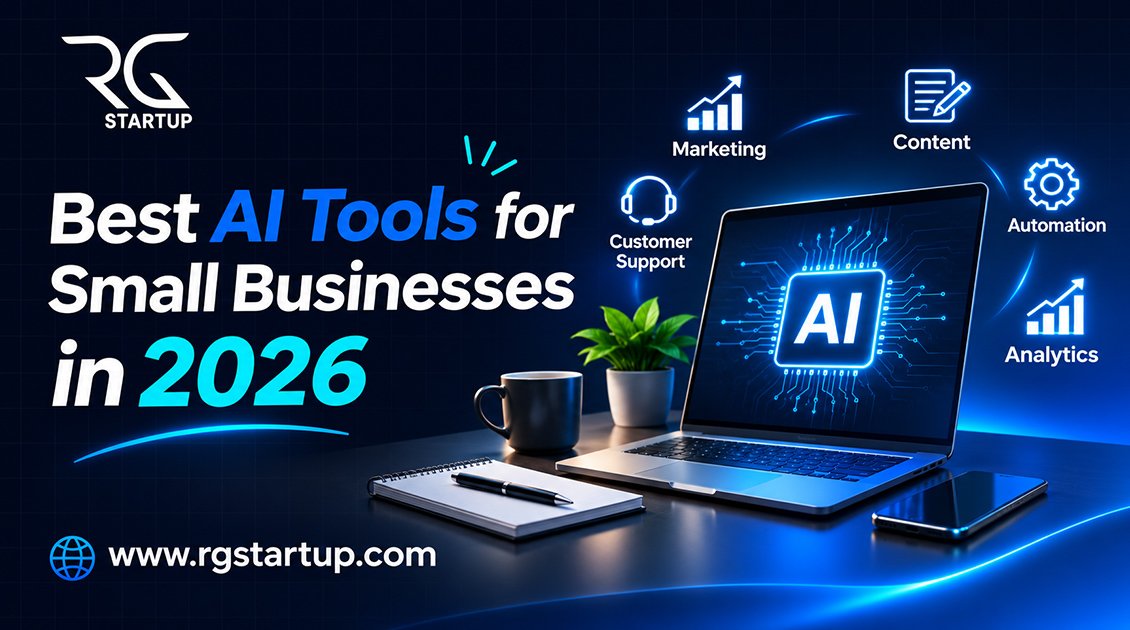
The best AI for small business isn’t the one with the most extensive feature set. The best AI for small business is the one that solves a real issue without adding more to the owner or team to learn to use.
The “stack” for most small businesses might be a well-rounded assistant, such as ChatGPT, Claude, or Gemini, and then specialised products for design, marketing, CRM, customer service, or automation. This will vary depending on what already works for the business.
The larger point: SMBs are no longer experimenting with AI, they’re deploying it to power their operations. Using the right applications, a small team can leverage AI to assist with research and content, communicate with customers, sell, create reports and essentially handle any drudgery.
What Should Small Businesses Look for in an AI Tool?
The tool may seem to work well in a demo, but may not be suitable for a real business. Small businesses have more constraints on them than large companies, in terms of time, number of employees, allocated technology budget, and space to accommodate complex implementation. Ease of use is critical, then, as well as the power of AI.
All these factors should be taken into account in a useful assessment of what the application does and whether it matches up to existing software and the level of setup, whether it is going to be practically used by the employees and data about the customer or business.
The following factors are particularly useful when shortlisting AI Tools for Small Companies:
- Does it solve a recurring business problem?
- Can non-technical employees use it comfortably?
- Does it integrate with existing software?
- Can the business start small before committing more money?
- Is there appropriate control over sensitive information?
- Will the time saved justify the subscription cost?
Best AI Tools for Small Businesses: A Quick Comparison
It isn’t about who is overall best, but which tool is best for the job at hand. A business that operates entirely within Microsoft 365 has different needs to a marketing agency, while a local service company is likely to focus more on customer phone calls and lead follow-up.
| AI Tool | Best Suited For | Main Strength |
| ChatGPT | General business work | Writing, research, brainstorming and analysis |
| Claude | Long-form work | Documents, proposals and detailed writing |
| Google Gemini | Google Workspace users | Gmail, Docs, Sheets and related workflows |
| Microsoft Copilot | Microsoft 365 businesses | Word, Excel, Outlook and Teams |
| Canva AI | Marketing and design | Social posts, presentations, graphics and creative assets |
| HubSpot Breeze | Sales and marketing | CRM, content, sales and service workflows |
| Zapier | Automation | Connecting applications and automating workflows |
| Lindy AI | AI workflows | Lead follow-ups and repeatable business processes |
| AI receptionist tools | Service businesses | Calls, appointments and lead capture |
1. ChatGPT: A Flexible AI Tool for Entrepreneurs
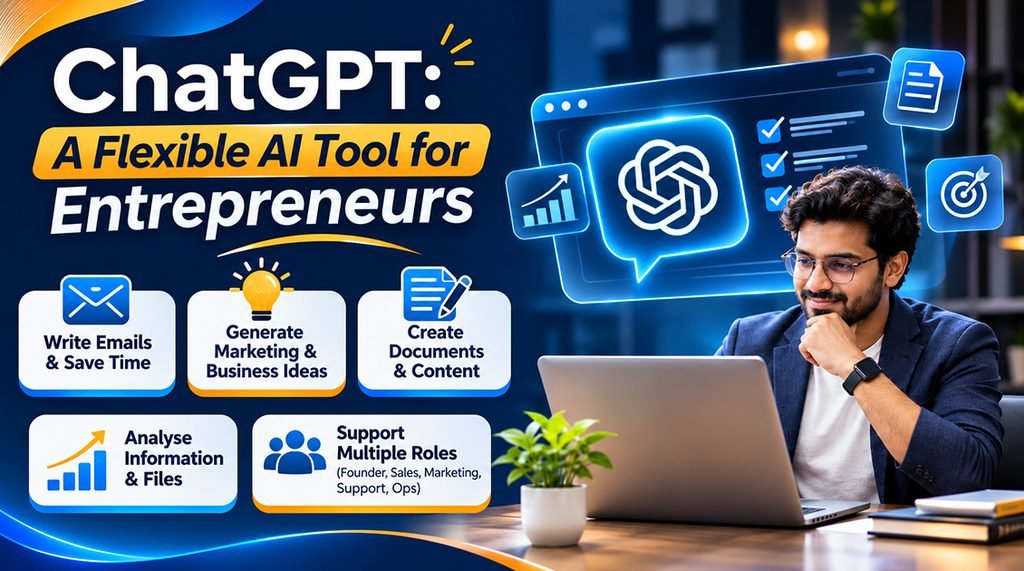
Many entrepreneurs will find that a general AI assistant is the best starting point. ChatGPT can help with all sorts of daily tasks for entrepreneurs – from writing emails and generating ideas for marketing to summarising, creating documents, analysing files and creating initial content.
That very flexibility is what makes it one of the more practical AI Tools for Entrepreneurs, because essentially the same tool has now been used by a founder, a salesperson, a marketer, a customer-support rep, or an ops manager to do something entirely different.
The drawback: No person specifically retains your organization’s context, nor replaces your CRM, accounting system, advertising and marketing system, and well-made workflow by default. For that reason, it’s like an elastic coating which allows your folks to do the job faster.
2. Claude: Useful for Long Documents, Proposals and Business Writing
You may also want to consider whether the work is better with large documents or short prompts. Small businesses commonly have proposals, policies, research documents, reports, client briefs and other material that can be unwieldy.
Considering its power of structured long writing, it is then relevant as it is one of the AI Productivity Tools for companies that have plenty of reading and writing.
You don’t need to buy one just because your business requires “an AI tool.” If your team has one assistant that manages most of its writing and analysis on a daily basis, deploying yet another general bot could, in fact, have less value. You need to ask yourself whether Claude fills a niche your existing tool doesn’t.
3. Google Gemini: A Natural Choice for Google Workspace Businesses
Companies that are already immersing themselves in Gmail, Google Docs, Sheets, Drive and more Google Workspace apps may find more value in Gemini as the AI experience is anchored within a familiar environment for employees.
The integrated experience can ease the friction of switching between applications. Email writing, document work, spreadsheet work, and research can occur near the tools people are already using.
What can Business AI Solutions learn from this experience: integration is more important than the strongest AI models.
4. Microsoft Copilot: Best Fit for Teams Already Using Microsoft 365
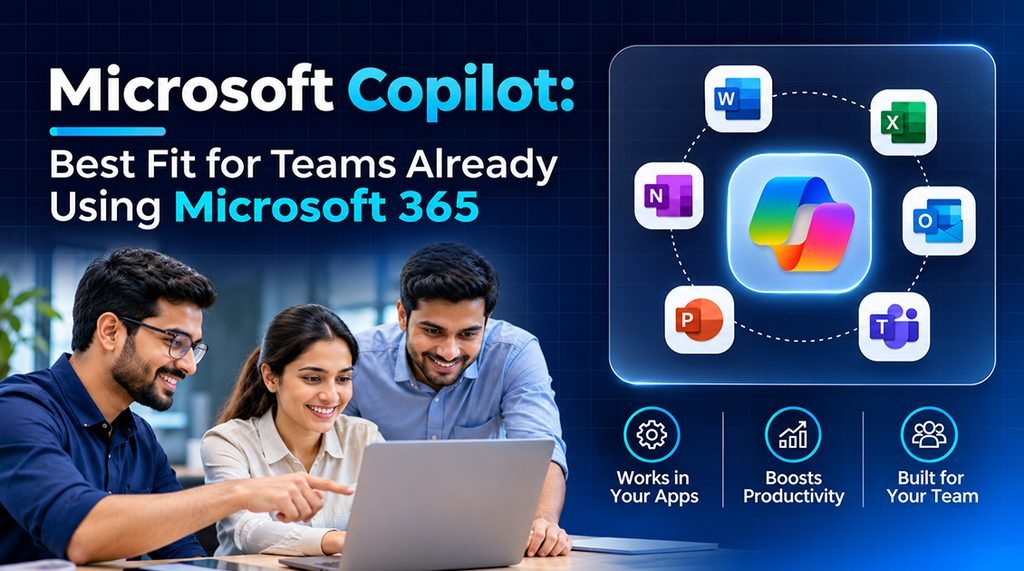
Microsoft Copilot is a business that already uses Word, Excel, Outlook, Teams, and the other Microsoft 365 apps. Rather than creating a whole new productivity software, Copilot layers the AI magic into the apps that people are already using.
That benefit might be even stronger than buying a dedicated AI assistant for your own business. Your business should be able to check right now what Copilot features it has available, based on its current Microsoft subscription.
The point here is simple: make your AI purchase based on your current process, not the latest trends.
5. Canva AI: Practical AI Marketing Tools for Small Teams
Not every small business has an in-house designer. However, business still requires social media graphics, slides, advertisements, posters, promotional materials, and more.
Canva’s AI capabilities allow smaller teams to generate and edit visual assets even if they don’t have sophisticated design skills. Accordingly, it’s particularly relevant as an AI Marketing Tool and as an AI Content Creation Tool.
What it doesn’t mean, then, is that it makes design thinking unnecessary. Instead, it cuts down the amount of time between a concept and the first working version.
For a small business that could be a few hundred bucks for a one-off content creation which would then make doing regular content creation more feasible. A marketer could bang out a first draft and then work through the tone, brand and imagery.
6. HubSpot Breeze: AI for Sales, Marketing and Customer Service
If your business requires more than content creation, it can choose to integrate AI into the CRM itself. Hub Spot Breeze, for example, is a tool that can help you generate content, process customer data, and facilitate sales and service workflows.
It is therefore a particular issue for companies that base sales, marketing and customer care on the same customer data.
Rather than storing customer data in one platform and AI efforts in a different one, the two can collaborate more effectively.
Helpful for teams handling lead management, follow ups, customer communication and marketing operations. But there is no one size fits all answer, it all depends on the company’s existing CRM and processes.
Just to switch to a new platform to get AI may not be economical if the current platform does the jobs you need.
7. Zapier: AI Automation Tools for Connecting Your Business Apps
Most companies don’t have one big problem. They have dozens of small mundane ones.
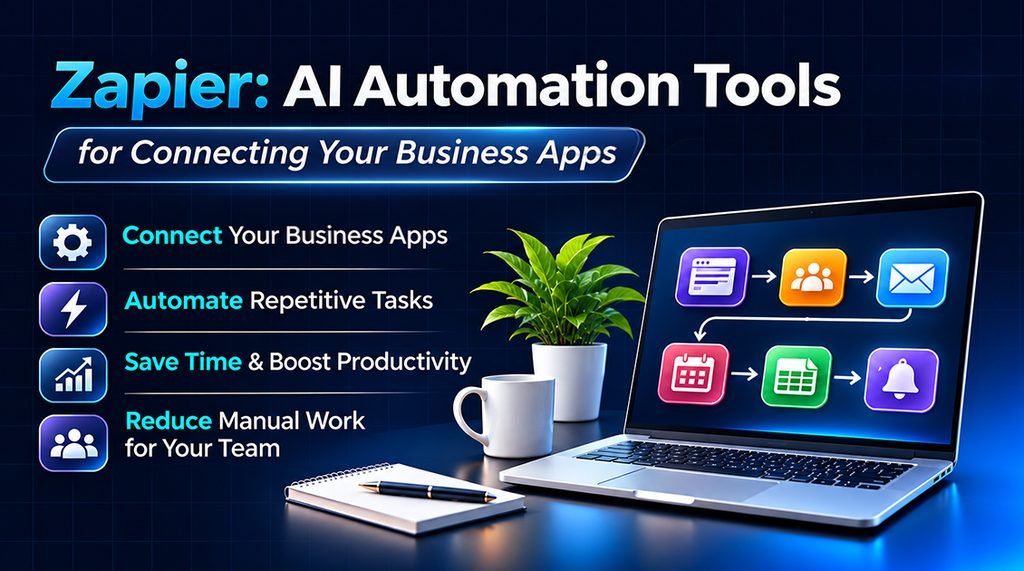
A lead is entered into the web Someone copies and pastes into the CRM An email is sent A calendar event is created A teammate is notified Later, someone enters data into a spreadsheet.
Tools like Zapier to link those tools, and automate parts of your workflow.
The one true difference is this: automating is interesting or useful only if the process you’re automating is great to begin with. Getting a terrible workflow up to speed doesn’t help anyone.As you plan to implement automation, take note of where data is entered, where your staff repeats themselves, and where there’s normally lag time. These are often the best places to begin rather than trying to automate everything simultaneously.
8. AI Tools for Small Businesses in India: Affordable Solutions for 2026
It’s not just about affordability for Indian small businesses. Adoption can be impacted by factors such as complexity to implement and use, mobile adoption, local customer behaviour, language support, WhatsApp integration and existing software.
As a result, it’s likely a small Indian business won’t go for software just because it’s used worldwide. Here’s an example list of software for a general Indian small business: A general AI assistant (to write and plan) Marketing design, creative tool A CRM with AI features (to handle leads) An automation platform (to work through processes) Customer-service (if enquiry numbers make it worth it).
Cheapest is not always the cheapest tool. The inexpensive app that nobody uses costs more than a higher cost tool that takes hours out of your week.
9. AI Productivity Tools: Where Small Businesses Can Save the Most Time
It’s the first place you might see AI provide some relief. Most owners are spending hours on end writing emails, reports, summarising meetings, collating information, composing pitches, researching subjects and converting pitch ideas into something tangible.
Reason might be a good candidate for AI because they are common, semi structured and often need a first attempt rather than a final one.
A practical question is not “How much of this workflow can AI actually accomplish?” but instead: “What of what we’re already doing as a team eats up our time and could instead be put to better use elsewhere in the business?”
As another example, an owner could prepare the first draft of client proposals with the help of the AI but put the final numbers and recommendations on their own. The salesperson can summarize meeting notes and prepare a second draft of follow-up. The marketer can generate a dozen content pieces from one research paper.
10. AI Customer Service Tools: When Should a Small Business Use Them?
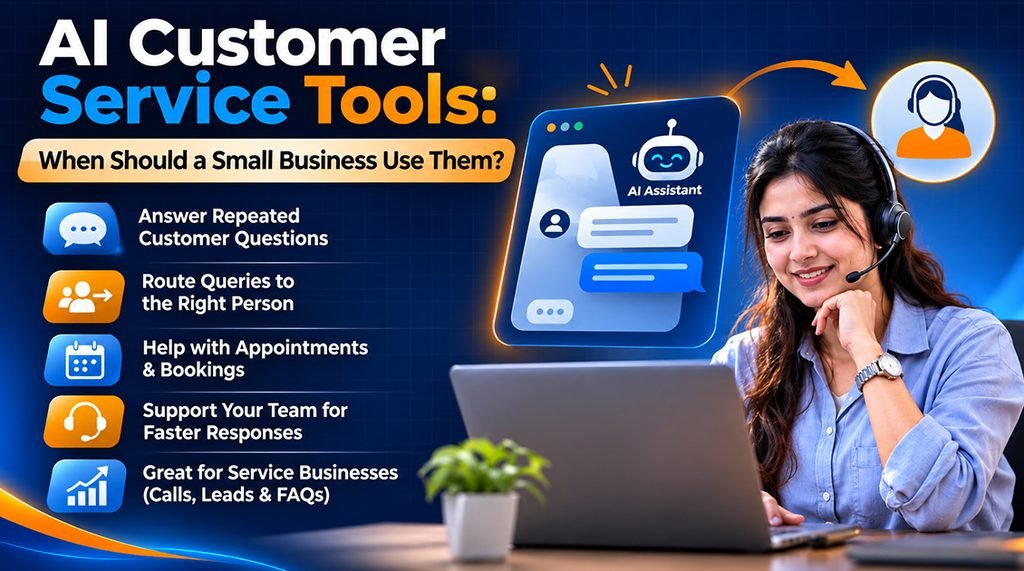
AI can also be used in customer service as well which will aid when the same questions are getting asked continuously, AI Customer Service Tools are designed in a way that helps to tackle such common enquiries and provide the details required, or also can be used to divert the conversation to the right person or help support staff in reaching appropriate answers in a shorter duration.
Not every message from a customer can be automatically handled. Complaints, refunds, exceptions, sensitive information, and anything that requires a touch of human judgment can be effective with a human operator.
The ideal scenario is often both. AI can answer the simple questions and gather basic information, with the support of a person at the point of the difficult question.
This can work well for service businesses where staff time is spent answering calls, capturing leads, responding to FAQs and taking appointments.
11. AI Sales Tools and Lead Management for Growing Companies
Salespeople don’t need another bot. They can do with a little more understanding of which prospects they should be talking to, and what next steps to take.
AI Sales Tools Do for You? – Lead Qualification – Follow Up Set Up – Sales Research – Meeting Summaries – Updates in CRM – Detect Trends in Interaction
These tools, when well integrated with your CRM, can get rid of manual administration that can potentially eat up your selling time.
Don’t get caught up in automatic lead scoring though. A lead score is only valuable if the data it’s based on is valuable. A prospect who loads a bunch of forms isn’t more qualified than a one-time but serious inquiry.
AI should be a sales support tool, not a crystal ball into the mind of a customer.
12. AI Business Automation: Which Tasks Should You Automate First?
Automations are often the perfect application of AI, because the best ones tend to be repetitive and predictable and observable and easy to measure. Do you have work that needs doing daily, in similar order, with no significant decision-making?
Some good early candidates are:
- Moving information between connected business applications.
- Sending routine appointments or enquiry confirmations.
- Creating meeting summaries.
- Preparing recurring reports.
- Organising incoming leads.
- Drafting routine follow-up messages.
- Repurposing approved marketing content.
Questions that include sensitive customer data, large financial decisions, legal obligations or difficult customer complaints should be approached more carefully.
Automation is about sharing the burden of repetitive work – not shifting accountability away from business owners.
How Much Should a Small Business Spend on AI Software?
No logical ‘AI budget’ exists. A five-man organization and a corner shop may have absolutely different requirements. Rather than come up with a monthly sum first, start with the business challenge and start to quantify what it is worth to you to fix it.
If someone spends ten hours each week doing report writing, then a tool that reduces that time significantly would definitely be worth examining. On the other hand, if the same tool cost a few minutes a month to do a task that was unusual, it probably wouldn’t be worth the cost.
Don’t just look at the subscription price. Think about implementation, training, integrations, other charges for using the system and the amount of time your people spend learning how to use the software.
Thus, low-cost AI Software should be valued by your perceived potential worth to your business – not by its monthly fee.
How to Build an Affordable AI Software Stack Without Buying Too Many Tools
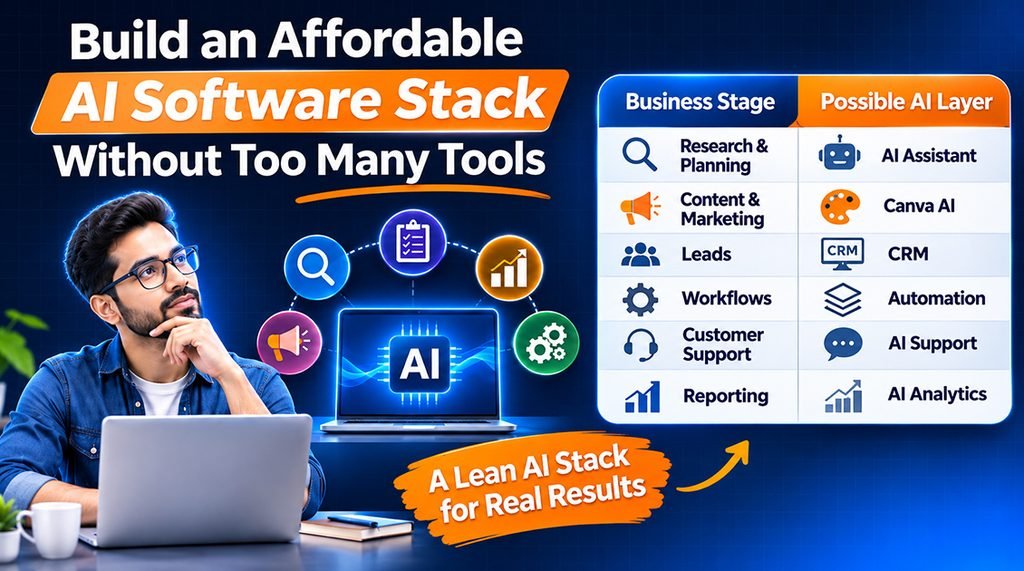
Another common mistake is signing up for AI subscriptions just because all of them seem to be helpful. Before too long, one can be using a tool for writing, another one for researching, then one more for designing, then one for automating, then one more for meetings, then a bunch of assistants that are doing the same thing.
And that is what AI was meant to fix.
A more sensible alternative approach is to create a slim stack around real workflows:
| Business Stage | Possible AI Layer |
| Research and planning | General AI assistant |
| Content and marketing | Canva AI and content assistant |
| Leads | CRM with AI features |
| Repetitive workflows | Automation platform |
| Customer enquiries | AI support or receptionist |
| Reporting | Analytics and AI-assisted summaries |
How Should You Choose the Best AI Tool for Your Small Business?
The right decision is not about what’s trendy, it’s about where you’re losing time or opportunities.
A freelancer might want an AI assistant to help with proposals and communicating with clients. A marketing agency might have more use for content creation, design tools, SEO, and automation tools. A home-services business might get more use out of an AI receptionist and lead follow-up system. A business that’s already in the Microsoft 365 or Google Workspace is usually better off adding AI inside their existing workspace.
This is why companies like RG Startup can contribute to the process, not just by suggesting an AI tool but by working on the technical side as well. RG Startup offers services in digital marketing, SEO services, website development, social media marketing, PPC, analytics, as well as AI and automation integrations.
The most effective tool is that which your teams will deploy, use consistently, and track back to a business impact that can be measured.
FAQs About AI Tools for Small Businesses in 2026
What are the best AI tools for SMBs in 2026?
ChatGPT, Claude, Gemini, Microsoft Copilot, Canva AI, Hub Spot, and automation platforms are the lifeblood of many. However the true starting point is your simple processes.
Are AI tools affordable for small businesses?
Many are budget or simple to get started plans, but compare overall cost, limits, integrations, and what those saved hours add up to for your bottom line.
Which AI tool is best for marketing?
Canva ai visuals support, general ai sales, research, and content assistant, plus crm software for customers.
Can AI automate an entire small business?
Not if not responsibly. AI can ease the burden on your team by automating elements of structured workflows but human input is still necessary for critical decisions, customer interaction and your company’s accountability.
What are AI tools for startups useful for?
Startups can use AI for research, content and product development planning, customer support, pre-sales, marketing, document creation, and other hard work.
Is it okay for a small company to use multiple AI tools?
It can, but for best results begin with the very smallest stack possible. Installing tools without clear goals will lead to false overhead and a disjointed workflow.
Can RG Startup help with AI implementation?
RG Startup offers digital marketing, SEO, development, analytics, AI, automation and integration that helps organizations to leverage AI as a piece of the bigger digital rather than as an individual technology.